
 Pin It
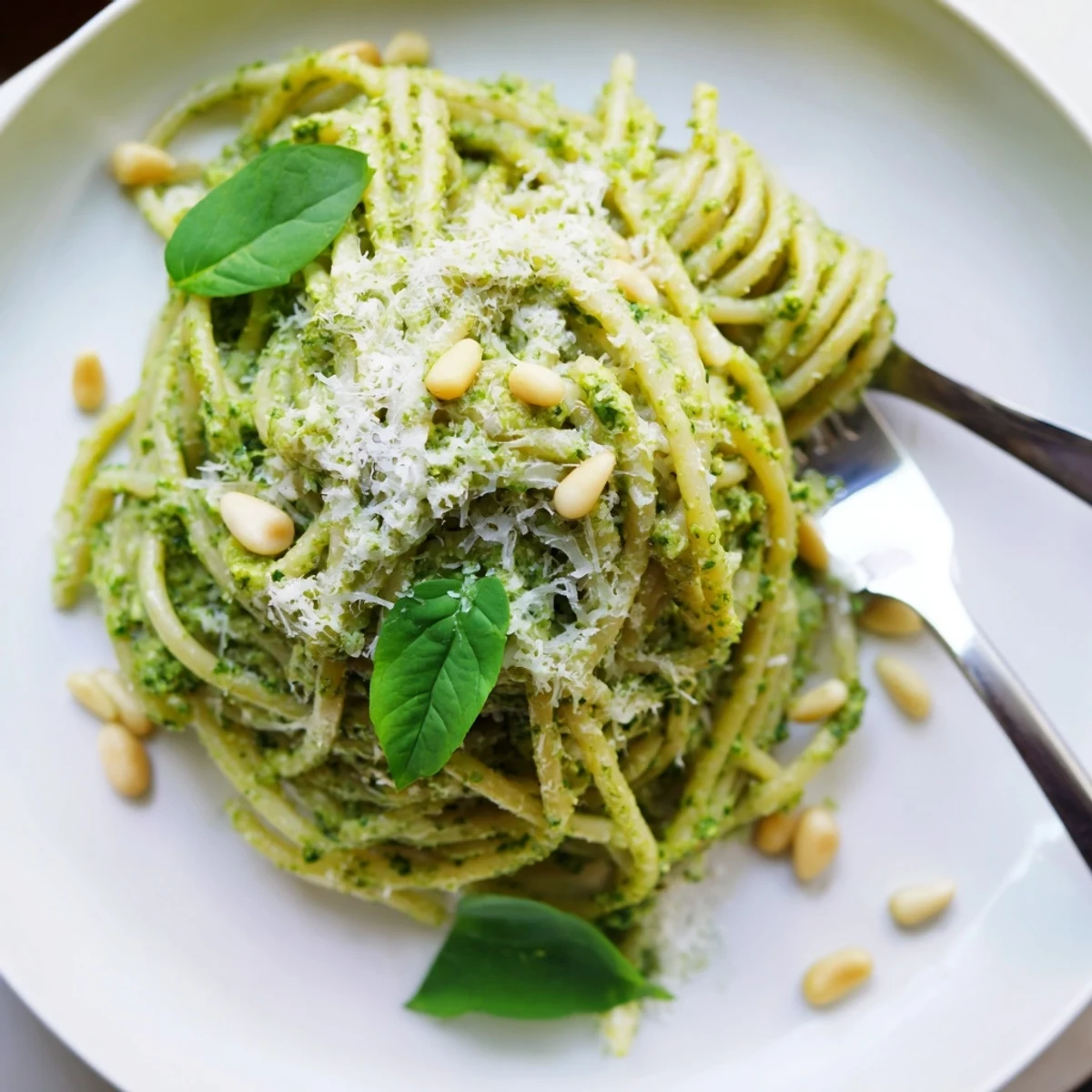
 This wild garlic pesto pasta brings the fresh, vibrant taste of spring straight to your plate in just 25 minutes.
Fragrant wild garlic leaves are blended with toasted pine nuts, aged Parmesan and quality olive oil into a luminous green sauce that clings beautifully to every strand of al dente spaghetti.
A squeeze of lemon brightens the mix, while a splash of starchy pasta cooking water ensures a silky, glossy finish. Simple, seasonal and deeply satisfying.
The smell hit me before I even saw the leaves, a pungent garlicky greenness wafting through the farmers market on a rainy April morning. I bagged three bunches without hesitating, already picturing the electric green sauce I would blitz together before lunch. Wild garlic season is maddeningly short, so I treat every bundle like a small emergency worth dropping everything for.
My neighbor Clara peeked over the fence while I was hanging the washing out and spotted a colander full of rinsed wild garlic on the kitchen counter. Twenty minutes later she was sitting at my table with a glass of Pinot Grigio, twirling spaghetti around her fork and declaring it the best thing she had eaten all year.
Ingredients
- 400 g dried pasta (spaghetti or linguine): Long strands hold the pesto differently than short shapes, and I find the silky coating on linguine almost hypnotic.
- 1 tbsp salt (for pasta water): The water should taste like mild seawater, because this is your one chance to season the pasta from within.
- 80 g wild garlic leaves, washed: Pat them completely dry after washing, because excess water dilutes the pesto and dulls the flavor.
- 30 g pine nuts (or walnuts): Toast them lightly in a dry pan for two minutes and you will unlock a warmth that raw nuts simply cannot give.
- 50 g grated Parmesan cheese: Use a block and grate it yourself, since pre grated cheese contains anti caking agents that make the pesto grainy.
- 80 ml extra virgin olive oil: A fruity, grassy oil will complement the wild garlic rather than fighting it.
- 1 small garlic clove (optional): Add it only if your wild garlic is very mild, because the leaves already carry plenty of punch.
- Half a lemon, juiced: A squeeze of acidity lifts every flavor and keeps the green from turning muddy.
- Salt and freshly ground black pepper: Season gradually and taste as you go, since the Parmesan already brings salt.
- Extra grated Parmesan and wild garlic leaves or edible flowers (for garnish): A few whole leaves on top make the dish look like it came from a restaurant kitchen.
Instructions
- Boil the pasta with intention:
- Bring a large pot of generously salted water to a rolling boil and cook the pasta until just tender with a slight bite at the center. Scoop out half a cup of that starchy water before draining, because it is liquid gold for your sauce.
- Blitz the wild garlic pesto:
- Drop the wild garlic, toasted nuts, Parmesan, olive oil, garlic clove if you are using it, lemon juice, and a pinch each of salt and pepper into a food processor. Blend until smooth and dreamy, scraping down the sides once or twice, then taste and adjust.
- Marry pasta and pesto:
- Toss the drained pasta back into the warm pot and pour the pesto over it, stirring gently with a splash of reserved pasta water until every strand glistens. Move quickly here, because the residual heat helps the sauce cling and emulsify.
- Plate and garnish:
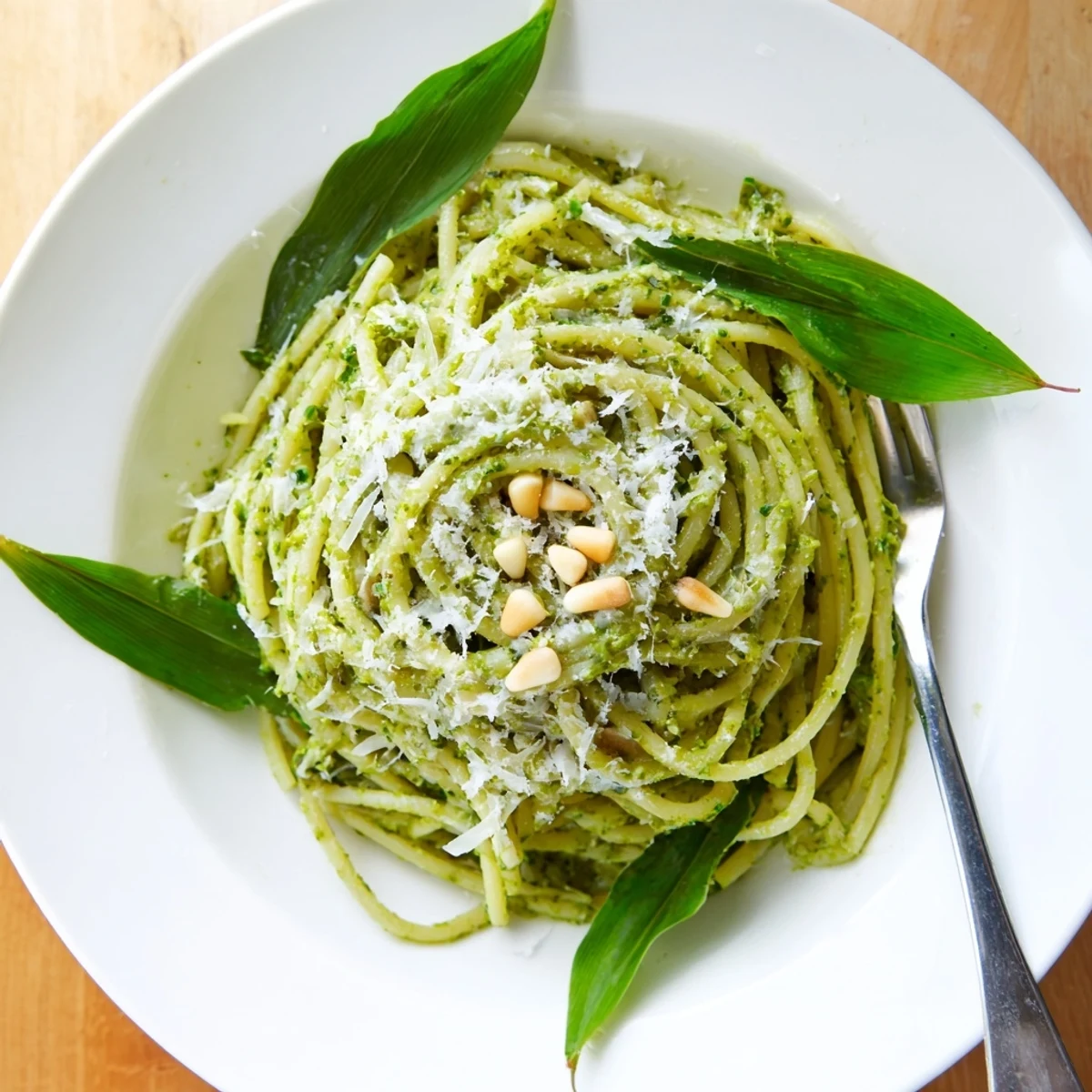
- Divide among bowls immediately and finish with a shower of Parmesan and a few wild garlic leaves or edible flowers scattered on top. Serve before the vibrant green starts to fade, which happens faster than you might think.
 Pin It
 There is something deeply satisfying about turning a handful of foraged leaves into dinner in under half an hour, especially when the kitchen smells like a spring woodland after rain.
What to Pair With It
A crisp glass of Pinot Grigio or a dry Verdicchio sits alongside this dish like an old friend. If you want a non alcoholic option, sparkling water with a thin slice of lemon echoes the citrus in the pesto and keeps everything refreshing.
Storing and Freezing
Leftover pesto keeps in a jar in the fridge for up to five days if you press a piece of plastic wrap directly against the surface to minimize oxidation. For longer storage, spoon it into ice cube trays, freeze until solid, then transfer the cubes to a bag and pull out exactly what you need on a busy evening.
Making It Your Own
This recipe is a playground once you understand the basic structure of a pesto.
- Swap the pine nuts for toasted sunflower seeds and you get a nutty, budget friendly version that tastes completely different but equally good.
- Stir in a handful of frozen peas or some blistered cherry tomatoes for extra sweetness and color.
- If wild garlic season has passed, use a mix of basil and baby spinach and add a tiny extra garlic clove to compensate for the milder flavor.
 Pin It
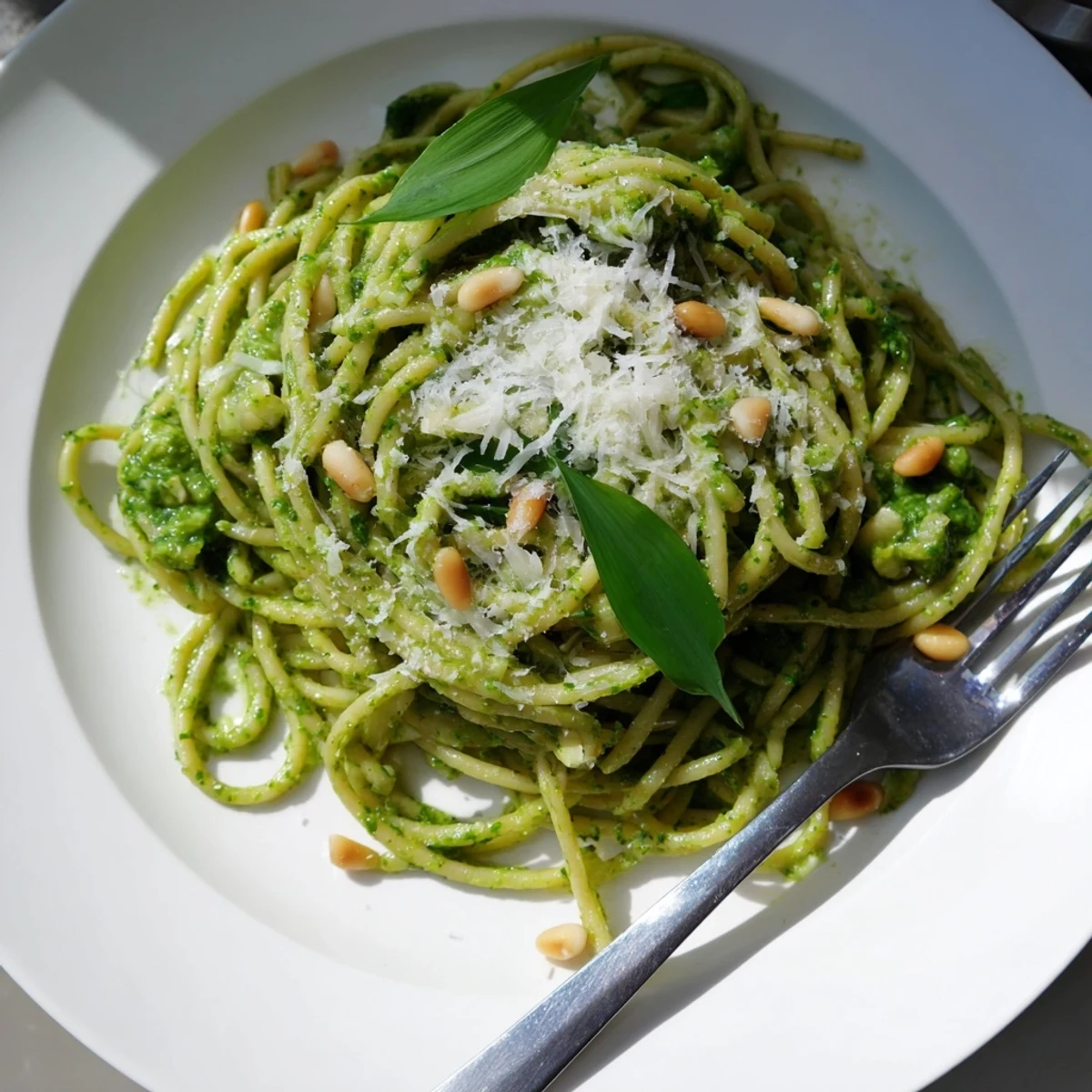
 Every spring I make this at least a dozen times, and each batch disappears faster than the last. It is the simplest kind of celebration, just pasta, leaves, and the brief wild window of a season that refuses to wait.
Recipe FAQs
- → Where can I find wild garlic?
-
Wild garlic, also called ramsons, grows abundantly in damp woodland areas during spring (March through May). You can forage it yourself or look for it at farmers' markets and specialty greengrocers during its short season.
- → Can I make the pesto ahead of time?
-
Yes, the pesto can be prepared up to 3 days in advance and stored in an airtight container in the refrigerator. Press a thin layer of olive oil on top to prevent oxidation and preserve the bright green color.
- → What pasta shapes work best with this pesto?
-
Long strands like spaghetti, linguine or fettuccine are classic choices that allow the pesto to coat evenly. Short shapes like fusilli or orecchiette also work wonderfully, as their crevices catch and hold the sauce.
- → How do I keep the pesto from turning brown?
-
Blanching the wild garlic leaves for 10 seconds in boiling water, then shocking them in an ice bath, helps lock in the vivid green color. The lemon juice in the pesto also acts as a natural preservative against discoloration.
- → Is there a nut-free alternative to pine nuts?
-
Sunflower seeds or pumpkin seeds make excellent nut-free substitutes that still provide a lovely creamy texture and subtle earthy flavor. Toast them lightly before blending for enhanced depth.
- → Can I freeze leftover wild garlic pesto?
-
Absolutely. Portion the pesto into ice cube trays, freeze until solid, then transfer the cubes to a freezer bag. Frozen pesto keeps well for up to 6 months and can be thawed directly into warm pasta.