
 Pin It
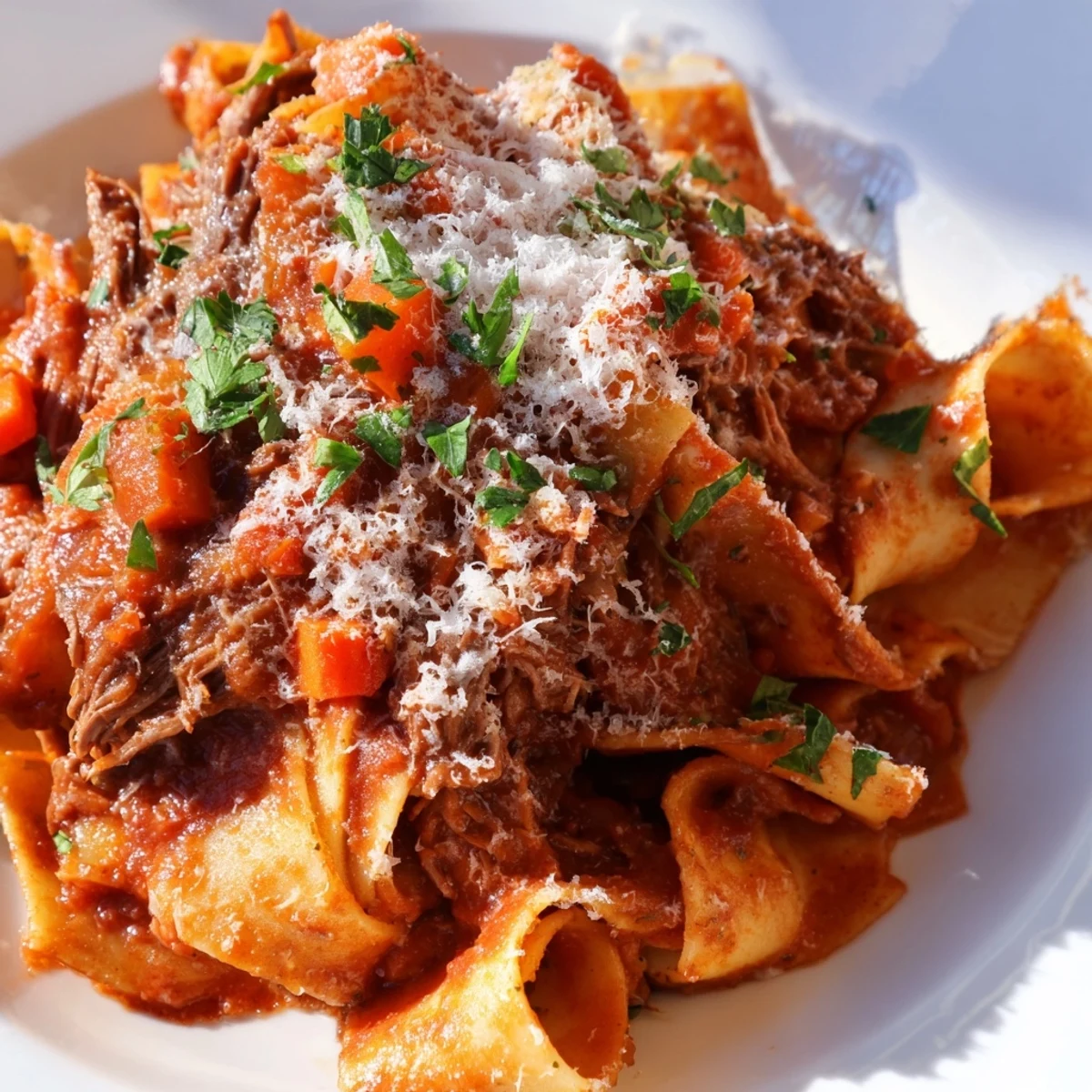
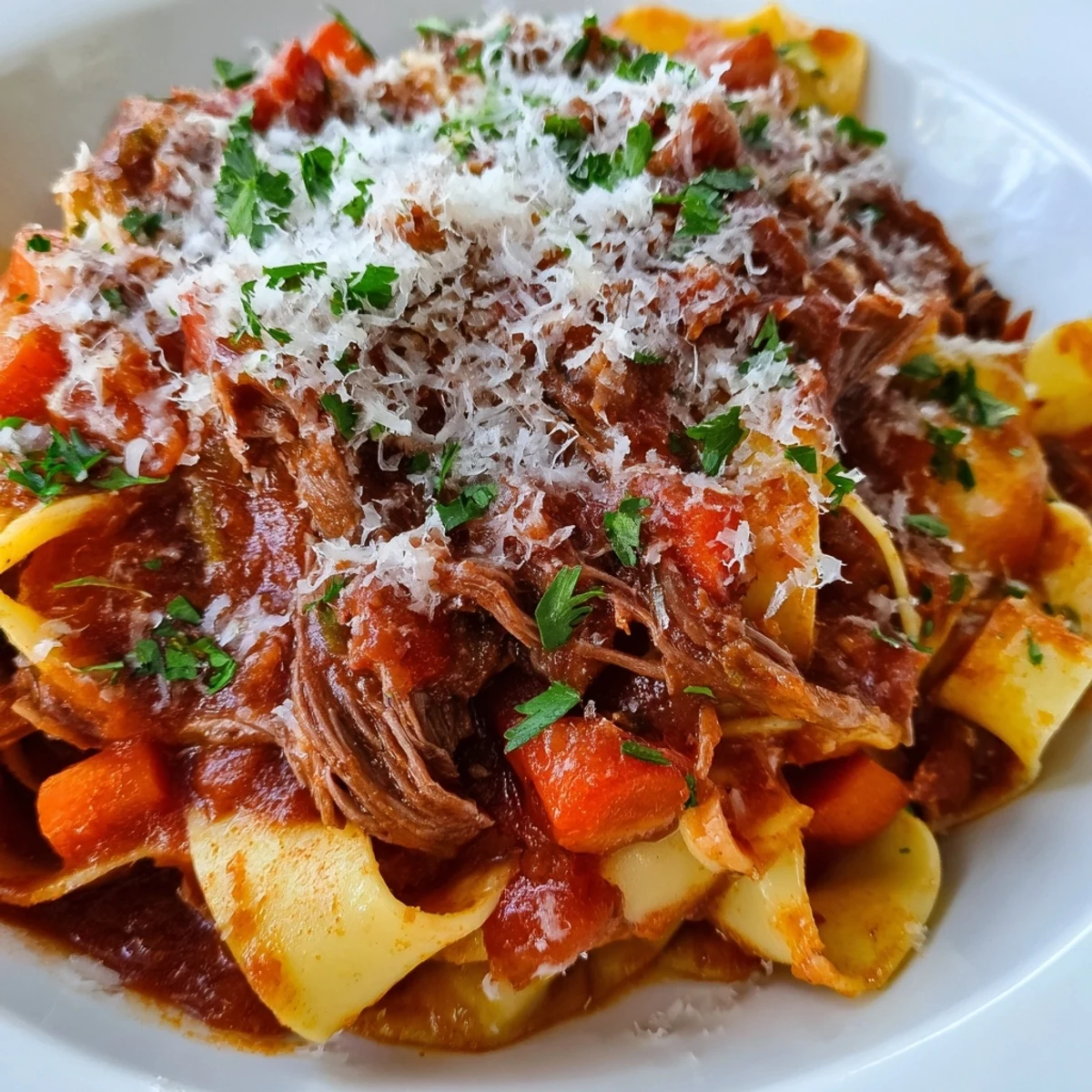
 This dish features beef chuck roast slow-cooked with aromatics, tomatoes, and herbs until very tender. The shredded meat creates a deeply flavorful sauce ideal for coating wide pappardelle pasta. Finish with fresh Parmesan and parsley for a classic Italian meal.
There's something about the smell of beef and red wine simmering for hours that makes a kitchen feel like home. The first time I made this ragu, I wasn't even thinking about dinner—I just wanted to fill the space with that deep, savory aroma while I worked through the afternoon. Eight hours later, when I lifted that slow cooker lid, the beef fell apart at the gentlest touch, and I knew I'd stumbled onto something worth repeating.
I remember serving this to friends on a cold evening when everyone arrived stressed and hungry. By the time we sat down, the table smelled like a Tuscan kitchen, and somehow that alone made the conversation feel slower and warmer. Someone asked for the recipe before dessert even came out.
Ingredients
- Beef chuck roast: This cut has just the right amount of fat and connective tissue to break down into silky strands during the long cook—don't skimp on size or quality here.
- Olive oil: Use something you actually enjoy tasting, because it matters in the searing step.
- Yellow onion, carrots, celery: The holy trinity of Italian cooking, and the slow cooker will transform them into a mellow, sweet base.
- Garlic: Fresh and minced, never jarred—the flavor difference shows up in the finished sauce.
- Tomato paste: A small amount creates deep umami that a longer cook time can't achieve on its own.
- Crushed tomatoes: Look for whole tomatoes crushed by hand, not the jarred version with added spices.
- Beef broth: Homemade is ideal, but quality store-bought works fine as long as it's not overly salty.
- Red wine: Drink something you wouldn't mind sipping while you cook—the acidity rounds out the richness.
- Dried herbs: Oregano, thyme, and basil work together to build a layered flavor that feels authentically Italian without being heavy-handed.
- Bay leaves: Essential for depth, but remove them before serving or someone will find one on their fork.
- Pappardelle pasta: Those wide ribbons catch the sauce in a way thin noodles never will.
- Parmesan and fresh parsley: The bright, salty finish that makes everything sing.
Instructions
- Season and sear the beef:
- Pat the beef chunks dry and season them generously with salt and pepper. This step matters more than you might think—it's the foundation of flavor. Heat olive oil in a large skillet until it shimmers, then sear each piece for about 2–3 minutes per side until deeply browned.
- Build the aromatics:
- In the same skillet, cook the onion, carrots, and celery for 4–5 minutes until they begin to soften and release their sweetness. Add the garlic and tomato paste, stirring constantly for just 1 minute to deepen their flavors.
- Combine everything in the slow cooker:
- Transfer the beef and vegetable mixture to your slow cooker, then add the crushed tomatoes, beef broth, red wine, herbs, and bay leaves. Stir gently until everything is evenly distributed.
- Let time do the work:
- Cover and cook on low for 8 hours, resisting the urge to peek too often. The beef will gradually become so tender it shreds with barely any pressure.
- Finish the ragu:
- Remove the beef with tongs or a slotted spoon, shred it gently with two forks, and return it to the sauce. Discard the bay leaves and taste for seasoning, adjusting salt and pepper as needed.
- Cook the pasta and serve:
- Boil the pappardelle according to package directions until al dente, drain it well, and either toss it directly with the sauce or serve the sauce spooned generously over each portion. Finish with a handful of Parmesan and fresh parsley.
 Pin It
 This dish taught me that sometimes the most impressive meals are the ones that require the least attention once you've done the initial work. There's a kind of magic in coming home to something that's been quietly becoming more delicious all day long.
Why Slow Cooking Changes Everything
A ragu made quickly on the stovetop will never taste the same as one that's had eight hours to develop. The slow heat doesn't just soften the meat—it coaxes out flavors that would stay hidden with high heat. The wine loses its sharp edges, the tomato becomes velvety, and the beef doesn't just cook; it transforms into something silky and complex.
Making It Your Own
This recipe is sturdy enough to handle additions without falling apart. I've added a Parmesan rind in the last hour of cooking, which adds an umami richness that deepens the sauce noticeably. Some people swear by a splash of balsamic vinegar stirred in at the end, and others add a pinch of cinnamon for an almost imperceptible warmth.
Serving and Storage Tips
Pappardelle is my first choice for this sauce, but tagliatelle or fettuccine will work beautifully if that's what you have on hand. The ragu actually tastes even better the next day, so don't hesitate to make it ahead.
- Leftover ragu keeps in the refrigerator for up to 4 days and freezes beautifully for up to 3 months.
- You can serve it over polenta, mashed potatoes, or even use it to fill lasagna if you're feeling ambitious.
- For a lighter version, use lean beef and go easy on the Parmesan, or skip it entirely if you're watching your dairy intake.
 Pin It
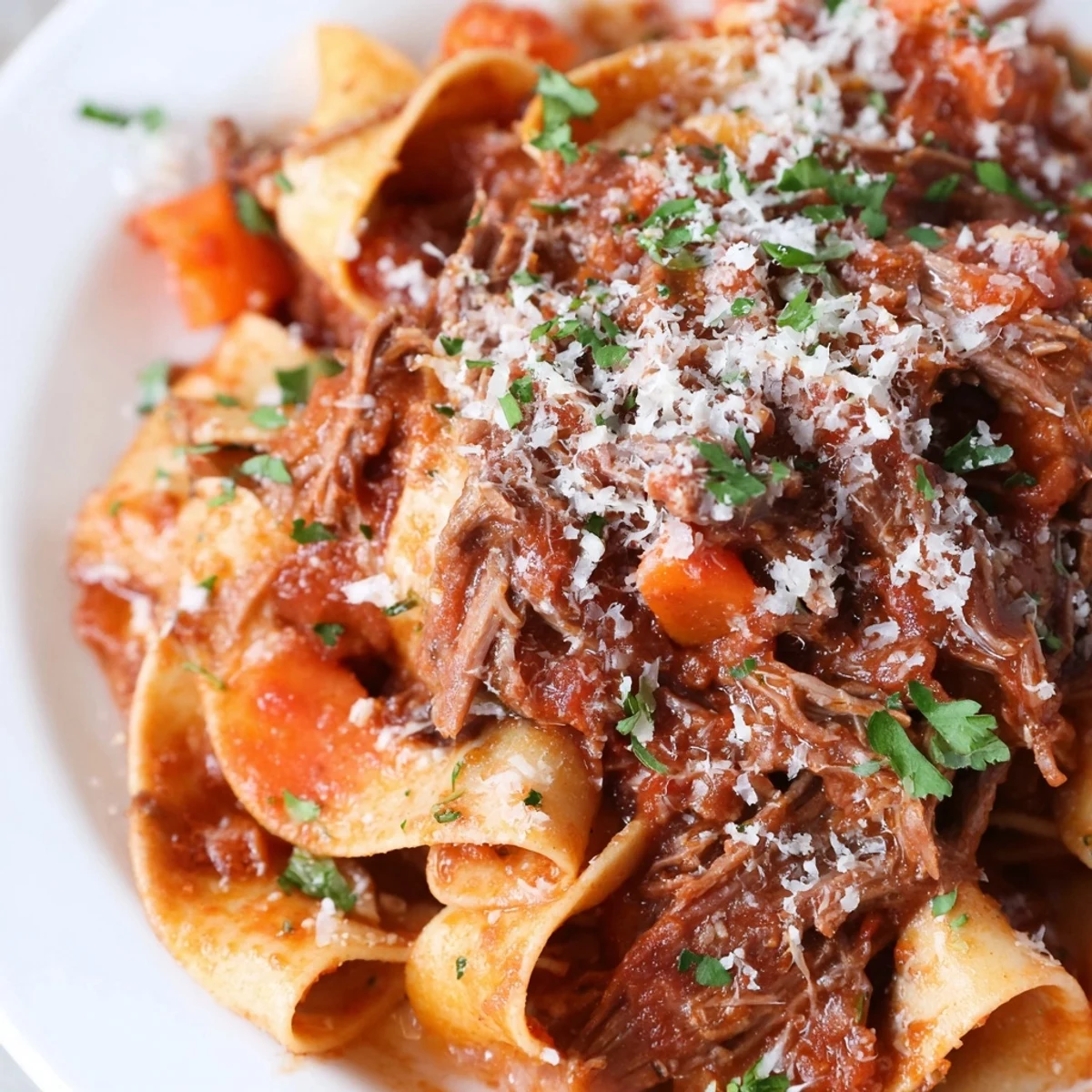
 This ragu is the kind of dish that brings people together without fuss. Make it once and it becomes part of your rotation—something you return to when you want comfort without complications.
Recipe FAQs
- → Can I use a different cut of meat?
-
Yes, bone-in short ribs work well for a richer flavor, or use stew meat for convenience.
- → Can I cook this on high heat?
-
You can cook on high for 4-5 hours, but low heat for 8 hours yields the most tender beef.
- → What pasta substitutes work best?
-
Tagliatelle or fettuccine are excellent alternatives that hold the thick sauce nicely.
- → How do I store leftovers?
-
Store in an airtight container in the refrigerator for up to 3 days or freeze for longer storage.
- → Is this suitable for meal prep?
-
Yes, the sauce flavors deepen over time, making it an excellent option for preparing ahead.