
 Pin It
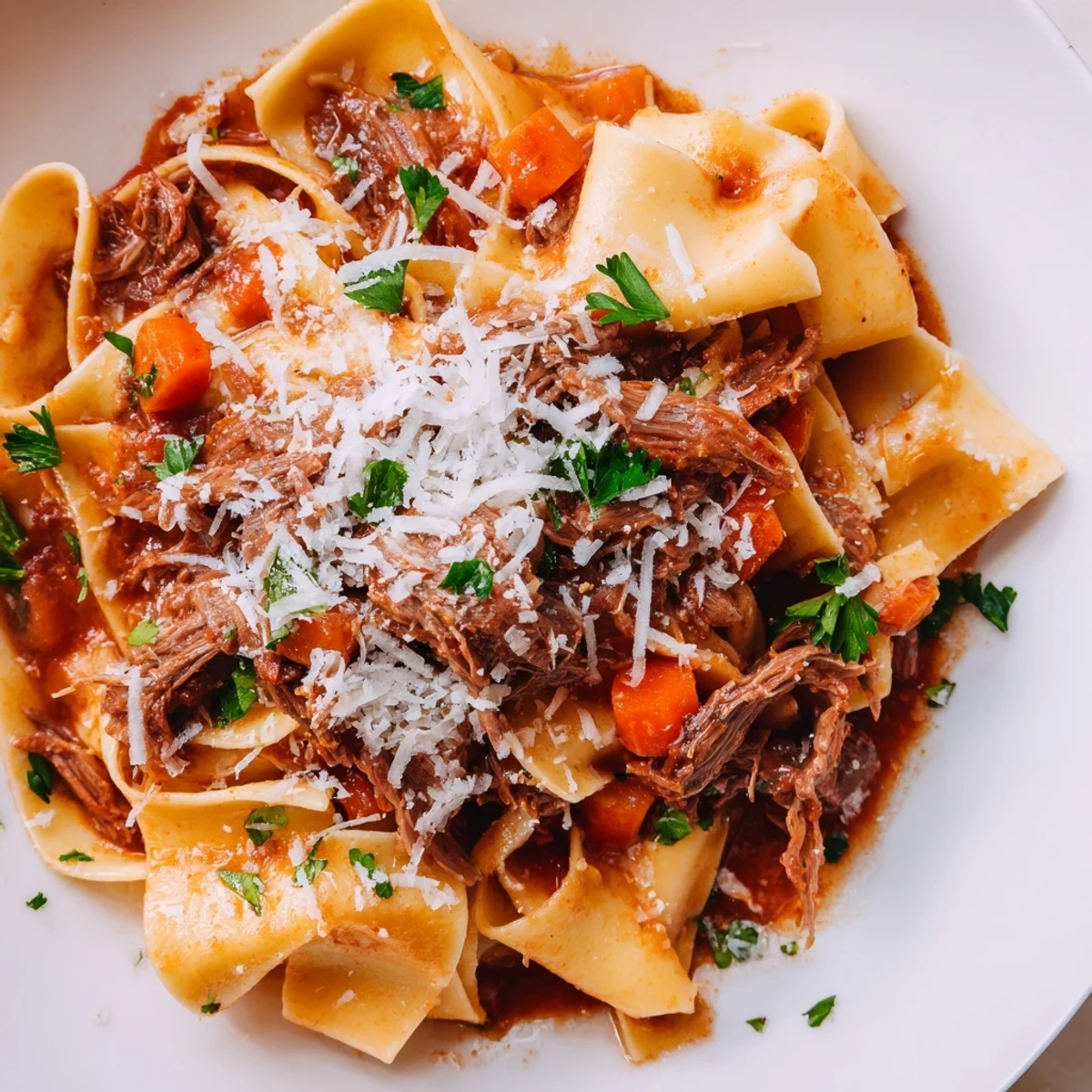
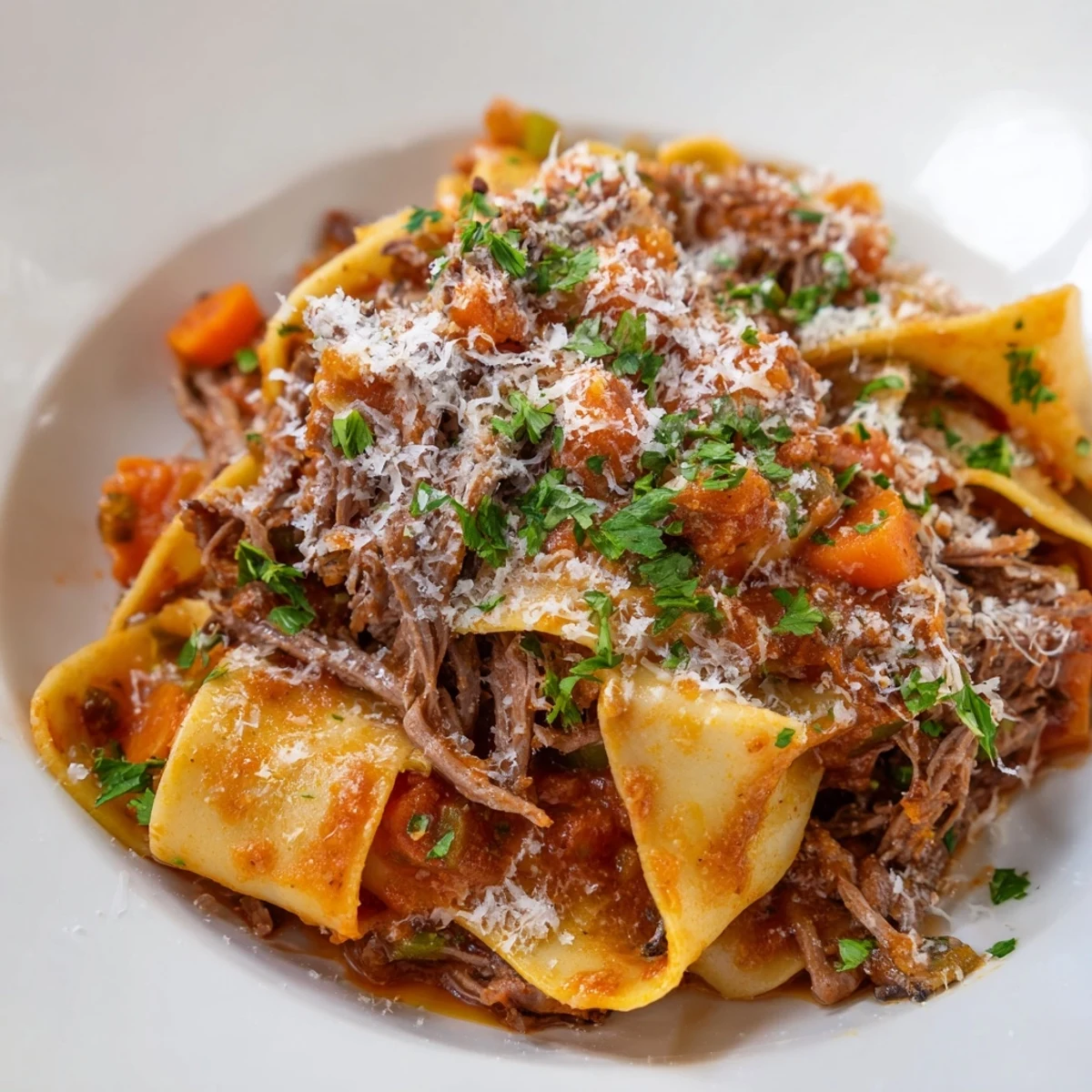
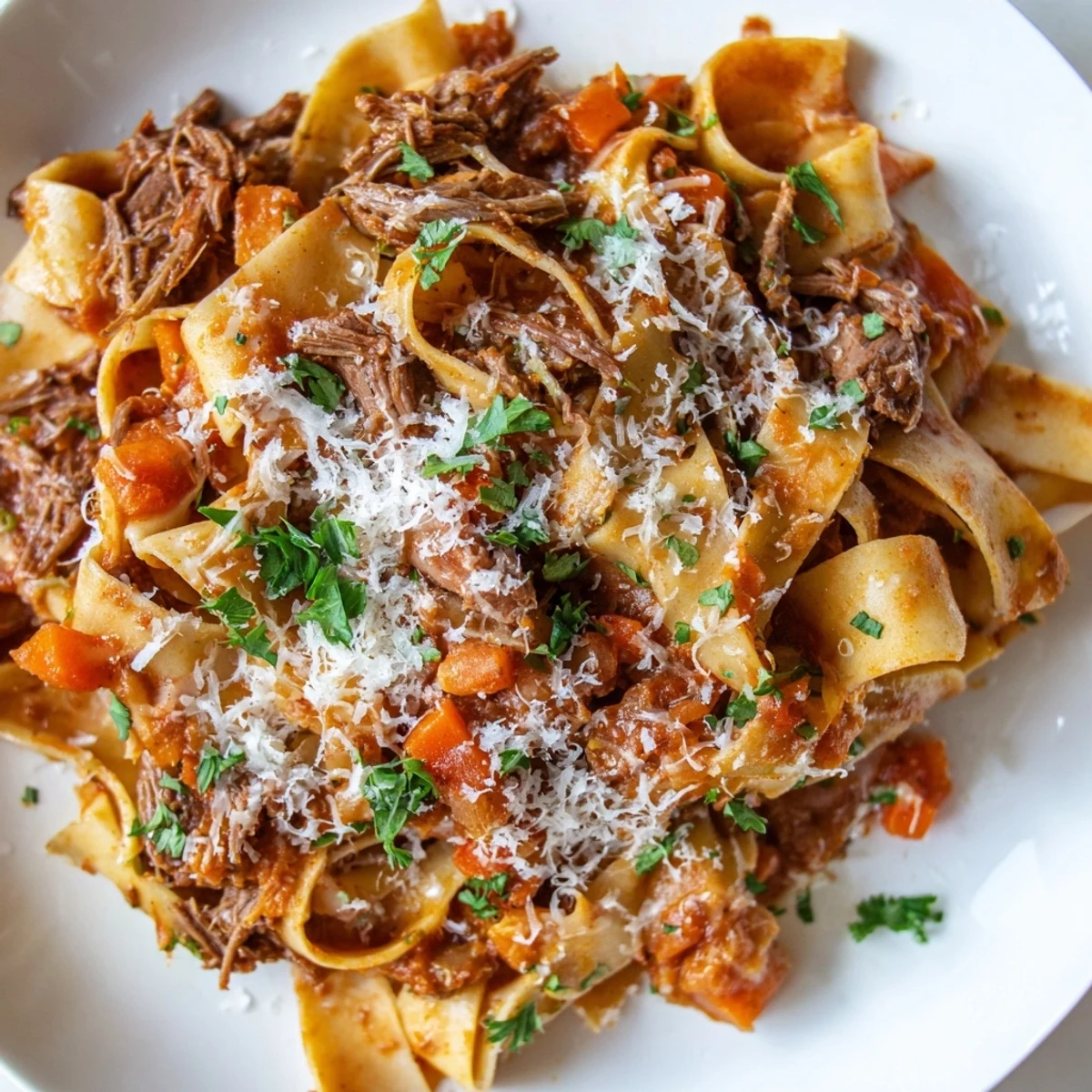
 This dish features slow-cooked beef chuck simmered in a rich tomato and herb sauce until tender and flavorful. Aromatics such as onion, carrots, celery, and garlic build depth, while red wine enhances complexity. The beef is shredded and combined back into the sauce, then served atop wide, silky pappardelle noodles. Fresh parsley and grated Parmesan provide finishing touches, creating a comforting, satisfying Italian-style entrée perfect for cozy dinners.
There's a particular kind of silence that falls over the kitchen when a slow cooker is doing its work, the kind that makes you want to linger over coffee and not much else. Years ago, on a cold Sunday afternoon, I found myself without a plan for dinner but with a chuck roast that needed rescuing and about eight hours of time stretching ahead. What emerged was this beef ragu, the kind that fills a house with such an insistent, savory perfume that everyone stops what they're doing to ask what's cooking.
I made this for my neighbor one February when she was between jobs and feeling a bit lost, and I remember how she sat at my table twirling noodles and actually laughing—really laughing—for the first time in weeks. That's when I understood this dish isn't just about the beef or the pasta; it's about what happens when you take time and heat and simple ingredients and turn them into something that matters.
Ingredients
- Beef chuck roast, 2.5 lbs, trimmed and cut into large chunks: This cut has just the right marbling to break down into tender, flavorful strands after hours of gentle heat; larger chunks prevent it from falling apart too early.
- Olive oil, 2 tablespoons: Use something you don't mind using, since the high heat for searing will mute delicate flavors anyway.
- Yellow onion, 1 large, finely chopped: Onions are your flavor foundation; don't rush chopping them fine, as they'll dissolve into the sauce and carry everything else along.
- Carrots, 2, peeled and diced: They add natural sweetness that balances the wine and tomatoes beautifully.
- Celery stalks, 2, diced: This is the quiet ingredient that makes the sauce taste like it came from someone's Italian grandmother's kitchen.
- Garlic cloves, 4, minced: Eight hours is a long time for garlic to cook, so it becomes mellow and sweet rather than sharp.
- Dry red wine, 1/2 cup: A wine you'd actually drink keeps the ragu from tasting thin or bitter; avoid anything labeled "cooking wine."
- Tomato paste, 2 tablespoons: This small amount concentrates the umami without overwhelming the beef; stir it in before adding other tomato products so it caramelizes slightly.
- Crushed tomatoes, 1 can (28 oz): Canned is actually preferable here because the tomatoes have been stewed already and blend seamlessly into the sauce.
- Beef broth, 1 cup: It's the liquid bridge that helps the flavors marry over those eight hours.
- Dried oregano, 2 teaspoons: Fresh oregano would fade to nothing in the slow cooker, so dried is the right choice.
- Dried thyme, 1 teaspoon: Thyme is more subtle than oregano and adds an earthy undertone that deepens everything.
- Bay leaves, 2: These must come out before serving; I always have a moment of mild panic wondering if I got them all.
- Sugar, 1 teaspoon: Just enough to round out the acidity of the tomatoes without making anything sweet.
- Chili flakes, 1/4 teaspoon (optional): A whisper of heat that makes people pause and ask what they're tasting.
- Pappardelle pasta, 1 lb: Those wide ribbons are intentional; they cradle the ragu like it was made for them, and they have a slightly chewy texture that narrow pasta misses.
- Fresh parsley, 1/4 cup, chopped: Add this at the very end so it stays bright green and herbaceous.
- Parmesan cheese, freshly grated: Grate it yourself right over the pasta; pre-grated cheese has a waxy texture that never quite melts in.
Instructions
- Season the beef generously:
- Scatter salt and pepper over each chunk as if you're blessing them for a long journey. This is your only chance to season the meat directly before it cooks, so don't be shy.
- Sear the beef until deeply browned:
- Heat that oil until it's almost smoking, then lay each chunk in with a satisfying sizzle. Brown takes time—roughly 2 to 3 minutes per side—but this step creates the dark, savory foundation everything else rests on.
- Sauté the vegetables until soft:
- In the same pan where the beef lived, add your onion, carrots, and celery and let them soften together, about 4 to 5 minutes, stirring occasionally. You'll know they're ready when the onion turns translucent and the whole kitchen smells like the start of something good.
- Finish the vegetables with garlic:
- Once the harder vegetables have softened, add the garlic and cook for just a minute more so it wakes up without burning.
- Deglaze the pan with wine:
- Pour that red wine into the hot skillet and use a wooden spoon to scrape up all the browned, stuck-on bits—this is liquid gold, the concentrated flavor of the beef. Let it bubble for about 2 minutes.
- Combine everything in the slow cooker:
- Transfer the beef and vegetables, then pour the wine into the slow cooker along with the tomato paste, crushed tomatoes, beef broth, oregano, thyme, bay leaves, sugar, and chili flakes if you're using it. Stir everything together so nothing sits alone.
- Cook low and slow:
- Cover the slow cooker and let it cook on low for 8 hours until the beef is so tender it shreds with barely any pressure from a fork. Resist opening the lid to peek; every time you do, heat escapes and time gets added back.
- Shred and finish:
- Fish out the bay leaves, then use two forks to pull the beef apart right in the pot. Taste and adjust the salt and pepper to your preference, remembering that pasta dilutes flavor slightly.
- Cook the pappardelle:
- Bring a large pot of salted water to a boil and cook according to the box instructions. When it's done, drain it and toss with a spoonful or two of ragu so the pasta doesn't stick and the flavors start mingling.
- Plate and serve:
- Twirl pasta into a nest on each plate, then spoon generous amounts of ragu over the top. Finish with a scatter of bright parsley and a snowfall of fresh Parmesan.
 Pin It
 What I love most about this ragu is how it transforms a tired Sunday into something worth celebrating, how it makes the house feel warm in a way that has nothing to do with the oven and everything to do with patience and generosity. My kids now request this without prompting, which is its own kind of victory.
Why a Slow Cooker Matters Here
A slow cooker isn't lazy cooking; it's cooking that respects time. The low, steady heat breaks down the connective tissue in chuck roast so completely that you end up with beef that tastes braised, rich, and almost luxurious without any of the babysitting an oven braise requires. You can leave for the afternoon knowing dinner is becoming itself without any effort on your part.
Making It Your Own
This recipe is forgiving in the best ways. If you can't find pappardelle, any wide pasta works, and some people swear by serving it over polenta or creamy mashed potatoes instead. The ragu itself stays delicious for 2 to 3 days in the fridge and actually tastes deeper the next day, making it perfect for meal planning or those nights when you need dinner to be effortless.
Pairing and Serving Suggestions
Serve this with a bold red wine—something with enough tannins to stand up to the richness of the beef, like a Chianti or Barolo if you're feeling fancy, or just a wine you enjoy drinking anyway. A simple green salad with sharp vinaigrette cuts through the richness beautifully, and a crusty piece of bread for soaking up every last bit of sauce is non-negotiable.
- Save any extra ragu in an airtight container; it freezes for up to three months and tastes even better than fresh.
- For a lighter version, toss in some mushrooms during the sauté or substitute whole wheat pasta.
- If you're not a fan of chili flakes, leave them out entirely—the ragu needs nothing sharp.
 Pin It
 This is the kind of meal that reminds you why people gather around tables, why cooking matters, and why sometimes the best thing you can do is let time and heat do the heavy lifting. Make it on a day when you can let your kitchen become the heart of your home.
Recipe FAQs
- → What cut of beef works best for this dish?
-
Beef chuck roast is ideal due to its marbling and connective tissue, which becomes tender and flavorful after slow cooking.
- → Can I prepare the sauce ahead of time?
-
Yes, the sauce can be made 1-2 days in advance and reheated gently to deepen flavors without losing texture.
- → What type of pasta pairs well with this sauce?
-
Wide pasta like pappardelle is preferred, as it holds the rich sauce well and adds a silky texture to the dish.
- → Is there a way to make this dish lighter?
-
Using whole wheat or gluten-free pasta can lighten the meal while maintaining flavor and texture.
- → Can I substitute the beef cut for other meats?
-
Brisket or short ribs also work well, offering rich flavor and tenderness after slow cooking.