
 Pin It
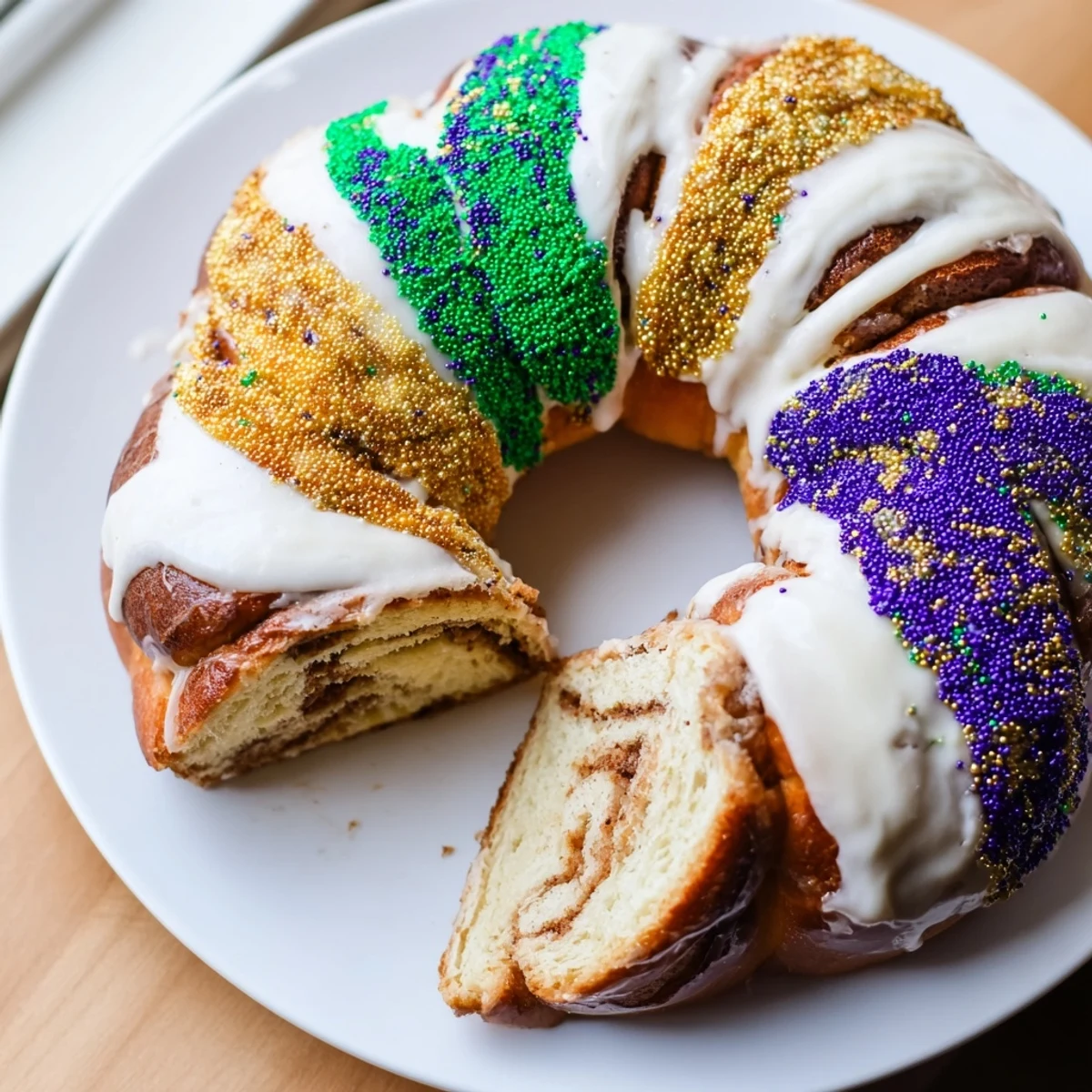
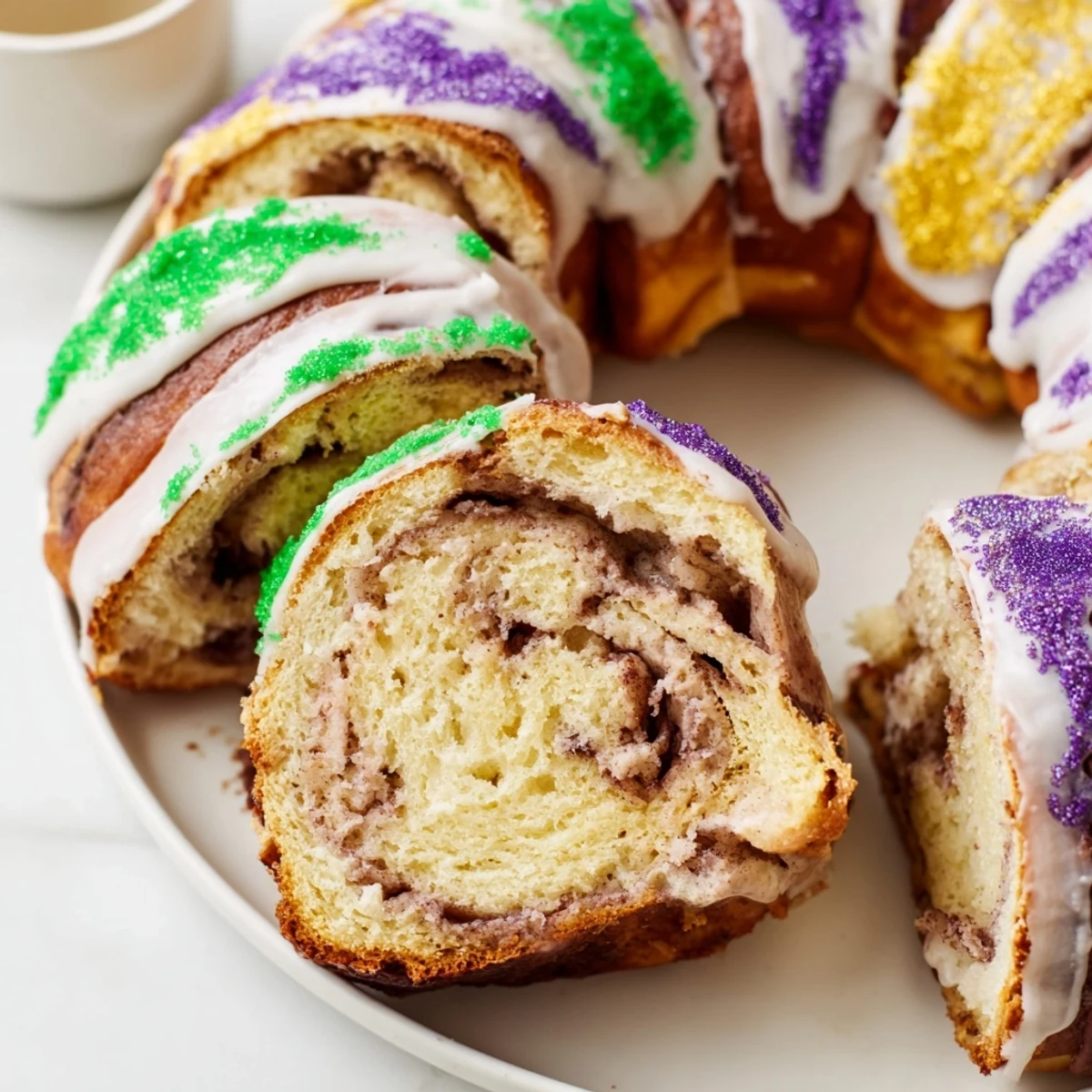
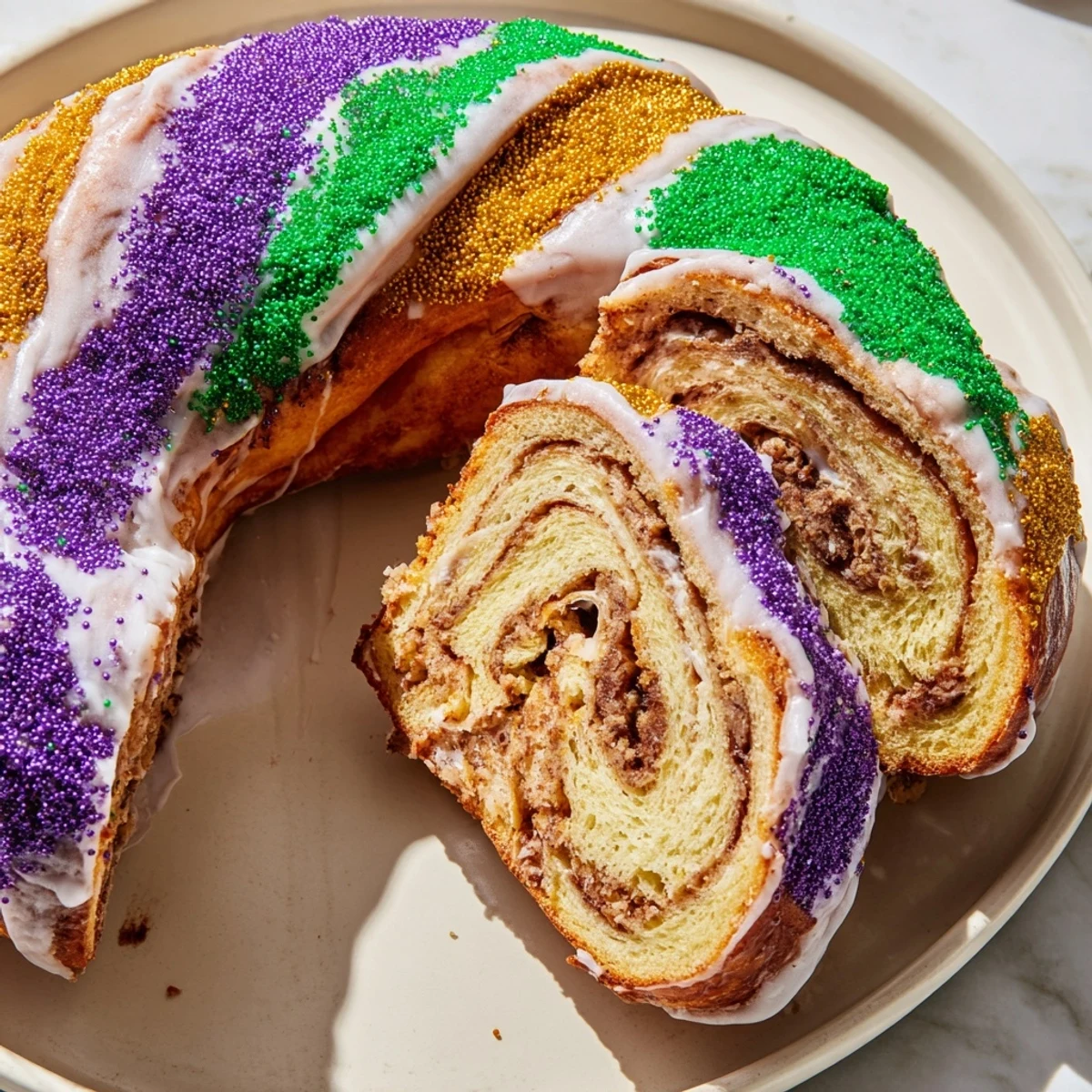
 This tender brioche-style king cake features a sweet cinnamon swirl filling and is topped with colorful icing and sanding sugars for a festive touch. The dough is enriched with butter, eggs, and vanilla, then rolled to encase a fragrant cinnamon and brown sugar mixture. After shaping into a ring and proofing, it’s baked to a golden finish. Once cooled, it’s drizzled with a smooth vanilla icing and sprinkled with purple, green, and gold sugar to celebrate Mardi Gras traditions.
Perfect for sharing during festive occasions, this classic cake blends light, fluffy texture with warm spices and vibrant decoration.
The kitchen smelled like butter and cinnamon that first Fat Tuesday I attempted king cake completely on my own. I'd watched my grandmother make it growing up, but this was my year to carry on the tradition. Something about the braided dough and those iconic colors felt like a celebration of spring coming. My roommate walked in mid-rolling and immediately volunteered to be the official taste tester.
Last year I made three of these cakes for different parties because everyone kept requesting it. The best part is watching people's faces when they cut into that first slice and the spiral reveals itself. My friend Sarah actually found the baby two years running and took her hosting duties very seriously.
Ingredients
- All-purpose flour: This creates the structure for your enriched dough, and bread flour would make it too chewy for a cake
- Whole milk: Lukewarm is key here, and I've learned that too hot kills the yeast while too cold makes everything sluggish
- Active dry yeast: One standard packet works perfectly, and watching it foam up feels like kitchen magic every time
- Unsalted butter: Softened to room temperature so it incorporates evenly into the dough, creating those tender brioche-like layers
- Granulated sugar: Just enough to sweeten the dough and feed the yeast without overpowering the cinnamon filling
- Large eggs: Room temperature eggs blend better and help create that rich, golden crumb structure
- Fine sea salt: Don't skip this, even in a sweet dough, because it balances all the sugar and enhances flavor
- Ground nutmeg: A tiny pinch that adds warmth and depth without announcing itself too boldly
- Vanilla extract: Pure vanilla makes a noticeable difference in the final flavor of both dough and icing
- Light brown sugar: Packed tight for the filling, creating that gooey cinnamon ribbon we're all here for
- Ground cinnamon: The star of the filling, and I like to use fresh cinnamon for the most aromatic swirl
- Powdered sugar: For a smooth, pourable icing that sets just enough to hold those colorful sugars in place
- Colored sanding sugar: Purple for justice, green for faith, and gold for power, the traditional Mardi Gras colors
Instructions
- Wake up the yeast:
- Combine warm water with a pinch of sugar and yeast in a small bowl, watching it bubble and foam over about 5 minutes. This step reassures me that the yeast is alive and ready to work its magic.
- Mix the wet ingredients:
- Whisk together the lukewarm milk, room temperature eggs, softened butter, sugar, salt, nutmeg, and vanilla until everything is thoroughly combined. Pour in your foamy yeast mixture and give it another quick whisk to incorporate.
- Build the dough:
- Gradually add flour while mixing, then knead by hand or with a dough hook for 8 to 10 minutes until the dough feels smooth and elastic. The dough should pull away from the sides of the bowl and feel tacky but not sticky to the touch.
- Let it rise:
- Place your dough in a greased bowl, cover it with a warm towel, and let it rise in a cozy spot until doubled in size, about 1 to 1.5 hours. I like to put mine in the oven with just the light on, creating a perfect draft-free environment.
- Roll it out:
- Punch down the risen dough gently and turn it out onto a lightly floured surface, then roll it into a 10 by 20 inch rectangle. The dough should be evenly thick throughout, with slightly tapered edges to help when you roll it up.
- Add the cinnamon swirl:
- Brush the entire rectangle with melted butter, then sprinkle your brown sugar and cinnamon mixture evenly across the surface, leaving a small border at the edges. This filling will create those gorgeous cinnamon ribbons in every slice.
- Form the ring:
- Roll the dough up tightly from the long side to form a log, then pinch the seam securely to seal everything inside. Transfer to a parchment-lined baking sheet and shape into a ring, pinching the ends together firmly, and optionally hide a plastic baby or bean from underneath.
- Second rise:
- Cover the ring and let it rise again until puffy, about 45 minutes, while you preheat the oven to 350°F. The dough should look noticeably larger and feel soft and pillowy when you gently press it.
- Bake to golden:
- Bake for 25 to 30 minutes until deeply golden brown all over, rotating once halfway through for even coloring. The kitchen will smell incredible, and you can test doneness by tapping the bottom, which should sound hollow.
- Make the icing:
- Stir together powdered sugar, milk, and vanilla until smooth and pourable, adding more milk a drop at a time if needed. You want it thick enough to hold its shape but loose enough to drizzle beautifully over the cooled cake.
- Add the finishing touches:
- Drizzle the icing over your completely cooled cake, then immediately sprinkle purple, green, and gold sugars in sections while the icing is still wet. Work quickly because once that icing sets, the sugars won't stick properly.
 Pin It
 That first year I made king cake, I accidentally put the plastic baby in before baking and it melted halfway through. We laughed about it anyway, and now I always tuck it underneath after the cake comes out of the oven. The tradition continues, mistakes and all.
Making It Ahead
I've learned that the dough actually develops better flavor when it rises overnight in the refrigerator. Just let it come to room temperature for about 30 minutes before rolling it out the next morning. The cold fermentation makes the dough easier to work with and adds subtle depth.
Getting The Shape Right
Shaping the ring took me a few attempts to master, and I used to end up with more oval than circle. Now I form the log, then bring the ends together overlapping by about 2 inches and pinch them thoroughly. Sometimes I use a small inverted bowl in the center of the baking sheet as a guide while it rises.
Decorating Like A Pro
The traditional Mardi Gras colors have specific meaning, and I love explaining that while I decorate with my nieces. Purple represents justice, green stands for faith, and gold symbolizes power. We make it a little party, dividing the cake into three sections and taking turns with each color.
- Use a piece of parchment paper under your cooling rack to catch all the extra sugar that falls off
- If your colored sugars are large crystals, crush them slightly between your fingers for better adhesion
- The icing sets fairly quickly, so have all your sugars open and ready before you start drizzling
 Pin It
 There's something joyful about serving a cake that's literally meant to be shared and celebrated. Whoever finds the baby buys the cake next year, or hosts the party, or according to my house rules, does the dishes.
Recipe FAQs
- → What type of flour is best for this cake?
-
All-purpose flour works well to achieve the tender, soft crumb typical of brioche-style cakes.
- → Can I substitute dairy ingredients in this cake?
-
Yes, plant-based milk and butter can replace dairy for a vegan-friendly version, though texture may vary slightly.
- → How do I achieve the cinnamon swirl inside the cake?
-
The dough is rolled out into a rectangle, brushed with melted butter, then evenly sprinkled with a cinnamon and brown sugar mixture before rolling up tightly.
- → What is the purpose of letting the dough rise twice?
-
Rising allows the dough to develop airiness and volume, resulting in a soft, fluffy cake following baking.
- → How is the colorful topping applied?
-
After baking and cooling, the cake is drizzled with vanilla icing, then sections are sprinkled with purple, green, and gold sanding sugars to create the traditional Mardi Gras look.
- → Can I prepare this cake ahead of time?
-
Yes, the dough can be made in advance and refrigerated to develop flavor, and the baked cake stores well for up to two days.