
 Pin It
 These scones balance the tartness of fresh lemon zest and juice with the sweetness of juicy blueberries. A blend of flour, sugar, and baking powder creates a tender crumb, complemented by cold butter worked into pea-sized pieces for flakiness. The dough is gently mixed with cream, egg, and vanilla then folded with blueberries before baking. A simple citrus glaze adds a final sweet tang, making these scones perfect for breakfast or a cozy snack.
My neighbor knocked on my kitchen door one Sunday morning with that look—the one that says she's smelled something incredible wafting over the fence. It was these lemon blueberry scones, golden and still warm, their citrus brightness cutting through the cool spring air. She asked for the recipe on the spot, and I realized right then that a good scone isn't just breakfast; it's an invitation to slow down and notice the small, delicious things.
I made these for my daughter's friend group during an impromptu sleepover, and watching them tear into them still warm with coffee felt like I'd unlocked some secret code of hospitality. One of the girls actually closed her eyes while chewing—the kind of moment that reminds you why home baking matters. They disappeared so fast I had to promise to make them again the next week.
Ingredients
- All-purpose flour (2 cups): The foundation that gives structure without being heavy—make sure it's fresh and stored cool, because stale flour changes everything.
- Granulated sugar (1/3 cup): Just enough sweetness to balance the bright lemon without overpowering the subtle berry flavor.
- Baking powder and baking soda (2 tsp and 1/2 tsp): These are your lift—use fresh ones and measure them level, not heaping, or your scones will taste bitter.
- Fine sea salt (1/2 tsp): A pinch that makes everything taste more like itself, especially the blueberries.
- Lemon zest (1 tbsp): Microplane it fine and add it to the dry mix so the oils distribute evenly throughout every bite.
- Unsalted butter, cold and cubed (1/2 cup): This is non-negotiable—warm butter means dense scones, so keep it in the freezer until the last moment.
- Cold heavy cream (2/3 cup plus more for brushing): The secret ingredient that makes these tender; don't skip it or substitute with milk.
- Large egg (1): Brings richness and helps bind everything together with gentle purpose.
- Pure vanilla extract (1 tsp): A quiet note that deepens the lemon flavor without announcing itself.
- Fresh lemon juice (2 tbsp in dough, 2–3 tbsp for glaze): The backbone of this recipe—use real lemons, because bottled juice tastes flat and one-dimensional.
- Fresh blueberries (1 cup): Don't thaw them if they're frozen; they'll hold their shape better and won't bleed into the dough.
- Powdered sugar, sifted (1 cup): Sifting matters here because lumps will show in your glaze and feel gritty on the tongue.
Instructions
- Prepare your station:
- Line a baking sheet with parchment paper and preheat your oven to 400°F. Having everything ready before you start keeps the dough at the right temperature and prevents that rush of scrambling.
- Combine the dry ingredients:
- In a large bowl, whisk together your flour, sugar, baking powder, baking soda, salt, and lemon zest. You'll notice the zest immediately brightens the pale flour with little flecks of yellow.
- Work in the cold butter:
- Drop in your cold butter cubes and use a pastry cutter or your fingertips to rub them into the flour until it looks like coarse breadcrumbs with some pea-sized pieces of butter still visible. This texture is what gives scones that special tender crumb.
- Make the wet mixture:
- In a separate bowl, whisk together the cold cream, egg, vanilla, and fresh lemon juice until completely combined. The mixture should be smooth and pale.
- Bring it together gently:
- Pour the wet ingredients into the flour mixture and stir with a fork until just combined—you should still see streaks of flour. Overmixing develops gluten and makes tough, dense scones, so resist the urge to keep stirring.
- Fold in the berries:
- Gently fold in the blueberries with a spatula using as few strokes as possible. Some blueberries will crack and stain the dough with blue swirls, which is exactly what you want.
- Shape the dough:
- Turn the shaggy dough onto a lightly floured surface and gently pat it into a 7-inch round about 1 inch thick. Treat it like you would a delicate thing—press, don't knead.
- Cut into wedges:
- Use a sharp, lightly floured knife to cut the round into 8 wedges, like a pizza. Space them on your prepared baking sheet so they bake evenly with room to develop edges.
- Finish before baking:
- Brush the top of each scone lightly with cream using a pastry brush. If you want extra crunch and shine, sprinkle coarse sugar on top now.
- Bake until golden:
- Bake for 16 to 18 minutes, watching for a deep golden color on top and a springy feel when gently pressed. The kitchen will smell incredible—that's how you know they're almost done.
- Cool and glaze:
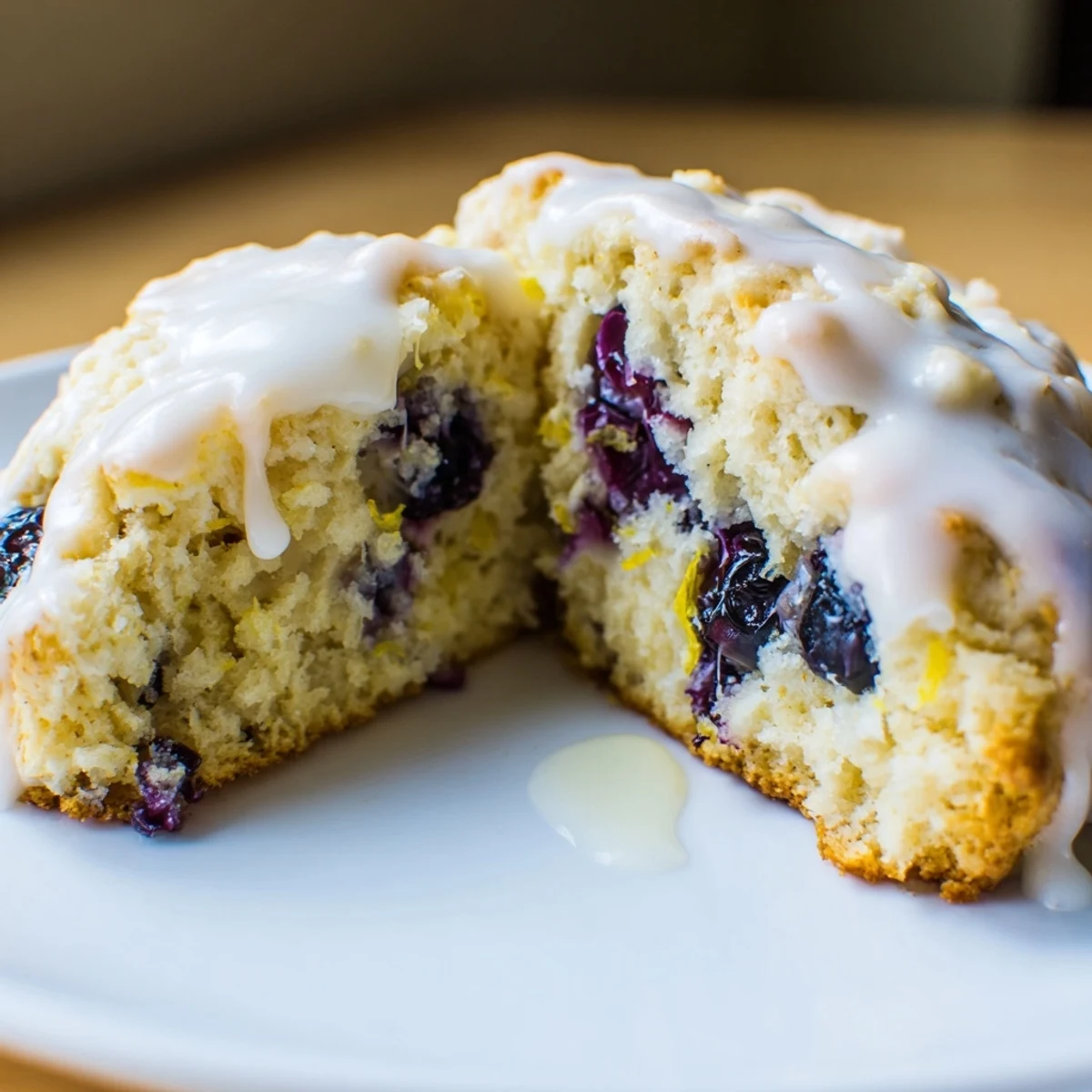
- Let them cool on a wire rack for a few minutes while you whisk the powdered sugar, lemon juice, and zest together until smooth and slightly runny. Drizzle the glaze over each cooled scone in whatever pattern feels natural.
 Pin It
 There's something about offering someone a warm scone with glaze still glistening that feels like you're handing them permission to have a good moment. These aren't complicated or pretentious—they're just honest, bright, and exactly what breakfast should taste like.
Why Lemon and Blueberry Work Together
Lemon is sharp and clean, cutting through the mild sweetness of blueberries and making them taste even more themselves. The acid in the lemon juice also helps activate the baking soda, giving you that subtle lift and tender crumb that makes people actually notice what they're eating. It's not a trendy flavor combination—it's just a pairing that respects both ingredients and doesn't make either one compete for attention.
Variations That Actually Work
Raspberries or blackberries can absolutely replace blueberries and will bring their own gentle tartness to the party. You could also try a subtle hint of poppy seeds mixed into the dry ingredients, or even a touch of cardamom if you want to shift the flavor toward something warmer and slightly spiced. The glaze stays the same—fresh lemon is the through-line that ties everything together.
Storage and Make-Ahead Tips
Scones are best eaten the day they're made, but you can refrigerate the shaped dough overnight and bake them fresh in the morning if you want that convenience. They also freeze beautifully after baking—just thaw at room temperature and warm gently before glazing. Storing them in an airtight container keeps them from drying out, though honestly, they usually don't last long enough to worry about that.
- Unbaked dough can sit in the fridge for up to 24 hours before baking, which means you can prep everything the night before.
- Fully baked and glazed scones stay fresh in an airtight container for about 2 days, though they're never better than within hours of baking.
- Wrap cooled scones individually in plastic wrap before freezing to prevent them from absorbing other flavors.
 Pin It
 These scones remind me that the best things to bake are the ones that feel achievable on an ordinary Tuesday morning. They're your invitation to surprise someone, including yourself, with something made with your own hands.
Recipe FAQs
- → What makes these scones tender?
-
Using cold butter cut into small pieces creates a flaky texture when baked, while the combination of baking powder and baking soda helps them rise gently without toughness.
- → Can frozen blueberries be used?
-
Yes, but use them unthawed to prevent excess moisture from making the dough soggy.
- → How do you make the glaze for these scones?
-
The glaze is made by whisking powdered sugar with fresh lemon juice and a touch of grated lemon zest until smooth and slightly runny.
- → What is the recommended baking temperature and time?
-
Bake at 400°F (200°C) for 16 to 18 minutes until the scones turn golden and are cooked through.
- → Can the lemon flavor be adjusted?
-
Yes, you can increase or reduce both the lemon zest and juice in the dough and glaze to taste.