
 Pin It
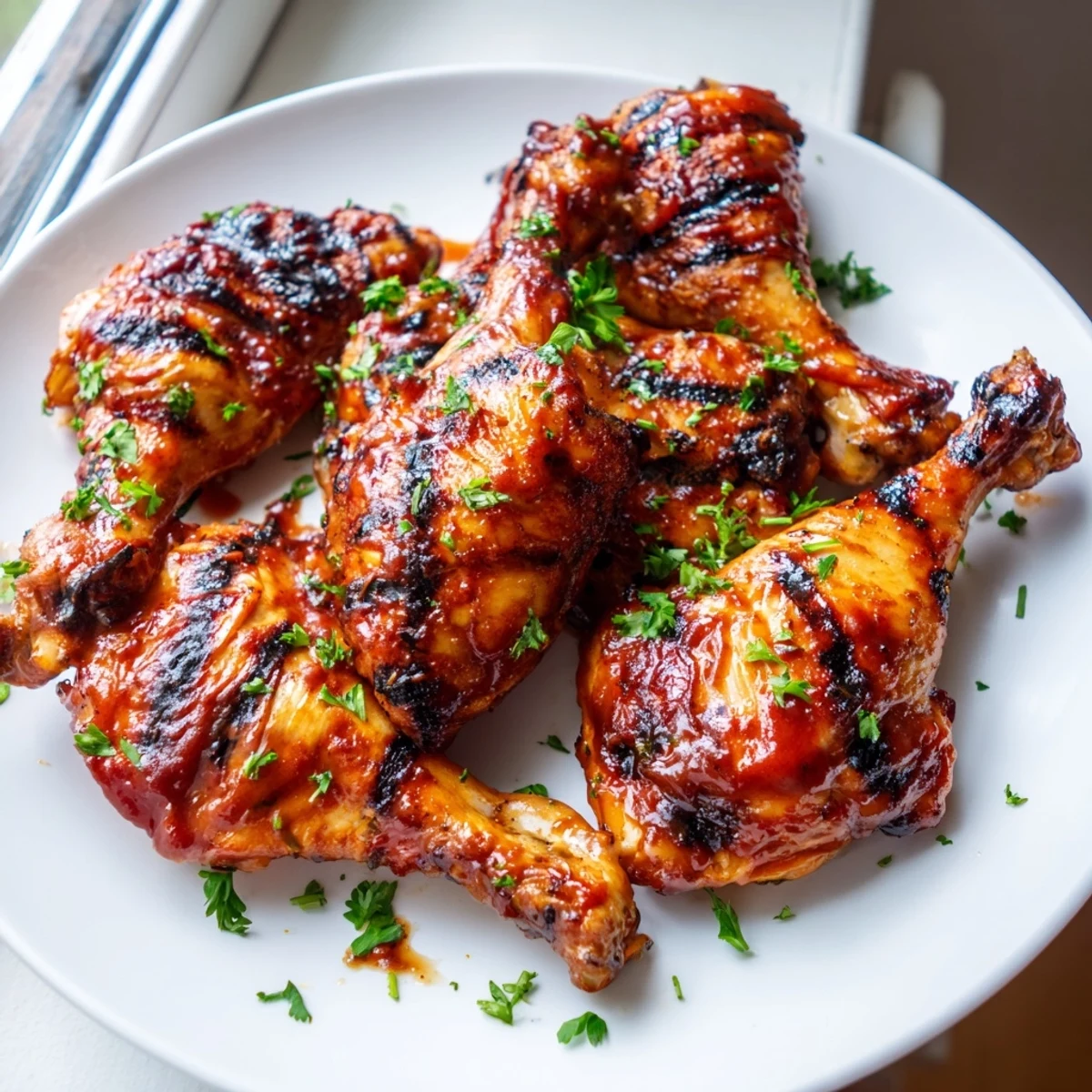
 This grilled barbecue chicken features bone-in thighs and drumsticks soaked in a rich marinade of barbecue sauce, apple cider vinegar, brown sugar, and smoked paprika. After marinating for at least one hour, the chicken hits a hot grill until the skin crisps and chars beautifully while the meat stays incredibly juicy inside.
Basting with reserved marinade throughout grilling builds layers of sticky, caramelized flavor. Serve alongside grilled corn, creamy coleslaw, or potato salad for the ultimate summer cookout plate.
The smell of charcoal and sweet sauce caramelizing on chicken is enough to make the whole neighborhood jealous, and I learned that the hard way when my backyard cookout attracted every kid on the block one July evening.
My friend Dave once told me my barbecue chicken was better than any restaurant he had tried, and honestly that compliment carried me through an entire week of bad days.
Ingredients
- Chicken thighs and drumsticks (bone in, skin on): The bones keep the meat moist while the skin gets beautifully crisp and holds onto that sticky sauce.
- Barbecue sauce: Pick one you already love eating straight from the bottle because its flavor will concentrate and intensify on the grill.
- Olive oil: Helps the marinade cling to every crevice of the chicken and keeps things from drying out.
- Apple cider vinegar: Adds a bright tanginess that cuts through the sweetness and balances the whole dish.
- Brown sugar: Creates those gorgeous caramelized edges that make people reach for seconds.
- Smoked paprika: This is the secret to getting that deep smoky flavor even if your grill runs a little mild.
- Garlic powder and onion powder: They provide a savory backbone without burning like fresh garlic would on a hot grate.
- Salt and black pepper: Never skip these because they wake up every other spice in the marinade.
- Fresh parsley: Entirely optional but a sprinkle of green right at the end makes the whole plate pop.
Instructions
- Build the marinade:
- Stir together the barbecue sauce, olive oil, apple cider vinegar, brown sugar, smoked paprika, garlic powder, onion powder, salt, and pepper in a large bowl until everything is smooth and glossy.
- Save some for later:
- Scoop out about a quarter cup of that sauce and tuck it away in a small dish because you will need it for basting and you do not want raw chicken juice in it later.
- Coat the chicken:
- Toss the thighs and drumsticks into the bowl and really work the marinade into every piece, getting it under the skin where you can, then cover and refrigerate for at least an hour or overnight if you are a planner.
- Get the grill ready:
- Heat your grill to medium high and oil the grates well so the skin does not glue itself down and tear when you try to flip.
- Grill and baste:
- Shake off the excess marinade from each piece, lay them skin side down, and grill for about six to eight minutes per side, brushing with that reserved sauce and turning occasionally until the chicken hits 165 degrees inside and the edges look beautifully charred.
- Rest and serve:
- Pull everything off the grill and let it sit for five minutes so the juices redistribute, then scatter some chopped parsley over the top if you are feeling fancy and serve right away while the skin is still crackling.
 Pin It
 There is something about standing at the grill with a basting brush in one hand and a cold drink in the other that makes you feel like you have figured out a small piece of life.
Best Sides to Serve Alongside
Grilled corn on the cob slathered in butter, a crunchy vinegar based coleslaw, or a big scoop of potato salad are all classic companions that let the chicken be the star.
No Grill, No Problem
You can bake the chicken on a roasting rack at 400 degrees for about 35 to 40 minutes, then hit it under the broiler for two or three minutes to crisp up the skin and get those charred edges.
A Few Things I Picked Up Over the Years
The longer you let the chicken marinate the deeper the flavor runs, but even a quick 30 minute soak is better than nothing at all.
- If you are using boneless chicken breasts cut the grilling time down to about four minutes per side to keep them from turning into cardboard.
- Always check your barbecue sauce label if you are cooking for someone with gluten or soy allergies because many brands hide those ingredients.
- A meat thermometer takes all the guesswork out of grilling and is honestly the best kitchen investment you can make.
 Pin It
 This is the kind of recipe that turns an ordinary weeknight into something worth remembering and makes you look like you tried way harder than you actually did.
Recipe FAQs
- → How long should I marinate the chicken?
-
Marinate the chicken for at least 1 hour in the refrigerator. For deeper, more pronounced flavor, you can leave it overnight. The longer marinade allows the smoky paprika, vinegar, and barbecue sauce to fully penetrate the meat.
- → Can I make this in the oven instead of on a grill?
-
Yes. Bake the marinated chicken at 400°F (200°C) for 35 to 40 minutes on a roasting rack, then switch to broil for a few minutes to get crispy, charred skin similar to grilling.
- → What internal temperature should the chicken reach?
-
The chicken is fully cooked and safe to eat when it reaches an internal temperature of 165°F (74°C). Use a meat thermometer inserted into the thickest part of the meat without touching the bone for an accurate reading.
- → Can I use boneless chicken instead?
-
Absolutely. Boneless chicken breasts work well but require less grilling time to prevent drying out. Reduce grilling time to roughly 4 to 5 minutes per side and monitor the internal temperature closely.
- → What barbecue sauce works best?
-
Any style of barbecue sauce works—smoky, sweet, or spicy varieties all bring something different. A thick, bold sauce with a good balance of sweetness and tang will produce the best char and caramelization on the grill.
- → Is this dish gluten-free?
-
It can be gluten-free if you use a certified gluten-free barbecue sauce. Always check the label on your sauce and any spice blends, as some brands include gluten-containing thickeners or additives.