
 Pin It
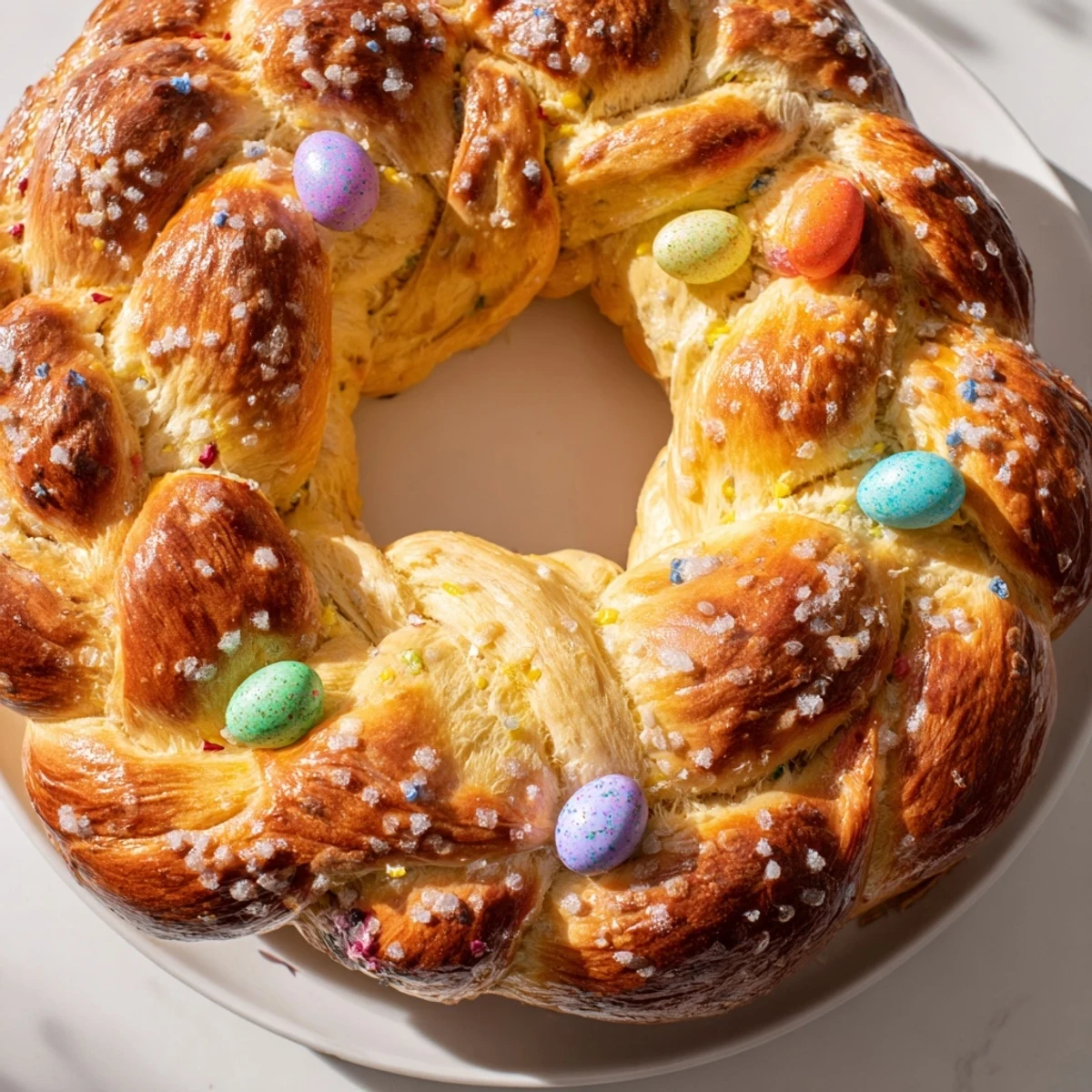
 This traditional Easter bread wreath features a slightly sweet, fluffy braided dough shaped into a ring and decorated with vibrant colored eggs nestled within its strands. The dough combines all-purpose flour, sugar, milk, butter, eggs, and a hint of lemon zest for a fresh aroma. After a careful rise and braid, the bread is baked until golden, with the eggs cooking safely inside. This eye-catching centerpiece balances delicate sweetness and festive flair, perfect for sharing at holiday celebrations or family gatherings.
The smell of lemon zest and yeast always takes me back to my grandmother kitchen on Easter morning. She would wake before dawn to start the dough, and by the time we children stumbled downstairs, the whole house would smell like something wonderful was happening. I remember watching her small hands work the dough, braiding it with such practiced ease that it looked like magic rather than skill. Now I understand why she made it every year, and why she always smiled when she tucked those colored eggs into the braid.
Last year I made six of these wreaths, one for each family at our Easter gathering. My cousin called me at midnight, panicked because her dough wasnt rising fast enough, and I talked her through moving it near a warm oven while we both laughed about how our grandmother never seemed to worry about timing. The next morning, all seven wreaths sat side by side on the counter, each one slightly different but all smelling like home. Those breads disappeared faster than the ham, and everyone fought over who got the egg with the blue swirl.
Ingredients
- All purpose flour: Four cups create the perfect structure for a soft yet sturdy bread that holds its wreath shape beautifully
- Granulated sugar: Half a cup provides just enough sweetness to complement the eggs without making this a dessert bread
- Active dry yeast: One packet ensures reliable rising every time, giving you those pillowy layers we all want in holiday bread
- Whole milk: Three quarters cup adds richness and helps create that tender crumb texture that makes this bread so addictive
- Unsalted butter: Melted butter weaves throughout the dough, creating flavor and softness in every single bite
- Large eggs: Two room temperature eggs bind everything together while adding structure and golden color to the finished loaf
- Salt: Just half a teaspoon balances the sweetness and wakes up all the other flavors
- Vanilla extract: One teaspoon adds warmth and depth that makes people ask what your secret ingredient is
- Lemon zest: The zest from one whole lemon brings brightness that cuts through the richness and screams spring
- Dyed uncooked eggs: Five to six raw eggs tucked into the braid become perfectly cooked in the oven and create that stunning festive look
- Milk for egg wash: Two tablespoons brushed on before baking gives the bread that gorgeous golden brown finish
- Optional sugar sprinkle: One tablespoon sprinkled on top creates a subtle sweet crunch that catches the light beautifully
Instructions
- Wake up the yeast:
- Dissolve your yeast in lukewarm milk with one tablespoon of sugar, then let it work for about five to ten minutes until you see a foamy layer on top
- Mix the dry foundation:
- Combine flour, remaining sugar, salt, and lemon zest in a large bowl so everything is evenly distributed before the wet ingredients join the party
- Bring it all together:
- Pour in the yeast mixture, melted butter, eggs, and vanilla, then mix until a soft dough forms that pulls away from the sides of the bowl
- Work the dough:
- Knead by hand or with a stand mixer for eight to ten minutes until the dough feels smooth, elastic, and bounces back when you poke it
- Let it rise:
- Place dough in a greased bowl, cover it, and let it rest in a warm spot for about one to one and a half hours until it has doubled in size
- Shape the ropes:
- Punch down the dough, divide it into three equal portions, and roll each into a rope about twenty inches long
- Create the braid:
- Braid the three ropes together, then shape into a ring and pinch the ends together to seal your wreath
- Add the eggs:
- Transfer your wreath to a parchment lined baking sheet and gently tuck those dyed raw eggs into the braid, spacing them evenly around the circle
- Second rise:
- Cover lightly and let the wreath rest for another thirty to forty five minutes until puffy and noticeably larger
- Prepare for baking:
- Preheat your oven to 350°F and brush the dough with milk, being careful to avoid getting any on the eggs
- Bake to golden:
- Bake for twenty five to thirty minutes until the bread is deeply golden brown and sounds hollow when tapped on the bottom
- Cool and serve:
- Let the wreath cool on a wire rack, then serve it warm or at room temperature with plenty of butter nearby
 Pin It
 My aunt once forgot to switch her wreath to a lower rack and came back to find the tops of her eggs slightly scorched. We still laugh about it every Easter, especially because she served it anyway and insisted the burnt bits added character. That wreath disappeared just as quickly as all the others, proving that even imperfect holiday bread brings people together in the best way.
Making The Most Beautiful Eggs
Use food coloring and vinegar in warm water, following the package directions, but do not be afraid to go bold with your colors. Pastel eggs look lovely, but vibrant jewel tones create absolutely stunning contrast against the golden bread. I have found that letting the eggs dry completely on a rack for at least an hour before tucking them into the dough prevents the colors from bleeding onto the bread during baking.
Getting The Rise Right
If your kitchen runs cool, like mine does in early spring, find the warmest spot in your house for that first rise. I turn my oven light on and place the bowl inside with the door cracked open, creating just enough warmth to make the yeast happy without actually baking the dough. The difference in texture between a slow cool rise and a proper warm rise is absolutely dramatic, so this small step is worth the extra attention.
Serving And Storage
This bread is best served the same day it is baked, when the crust is still slightly crisp and the inside is impossibly tender. Leftovers will keep for about two days in an airtight container, though you might want to gently warm slices in the oven to recapture some of that fresh baked magic. The baked eggs inside stay good for serving, so do not worry about removing them before storing.
- Slice the wreath by cutting between the eggs so each serving gets one of those colorful baked eggs
- If serving at room temperature, the bread is still wonderful, especially with a generous spread of salted butter
- This wreath freezes beautifully for up to three months if you want to make it ahead for easier holiday prep
 Pin It
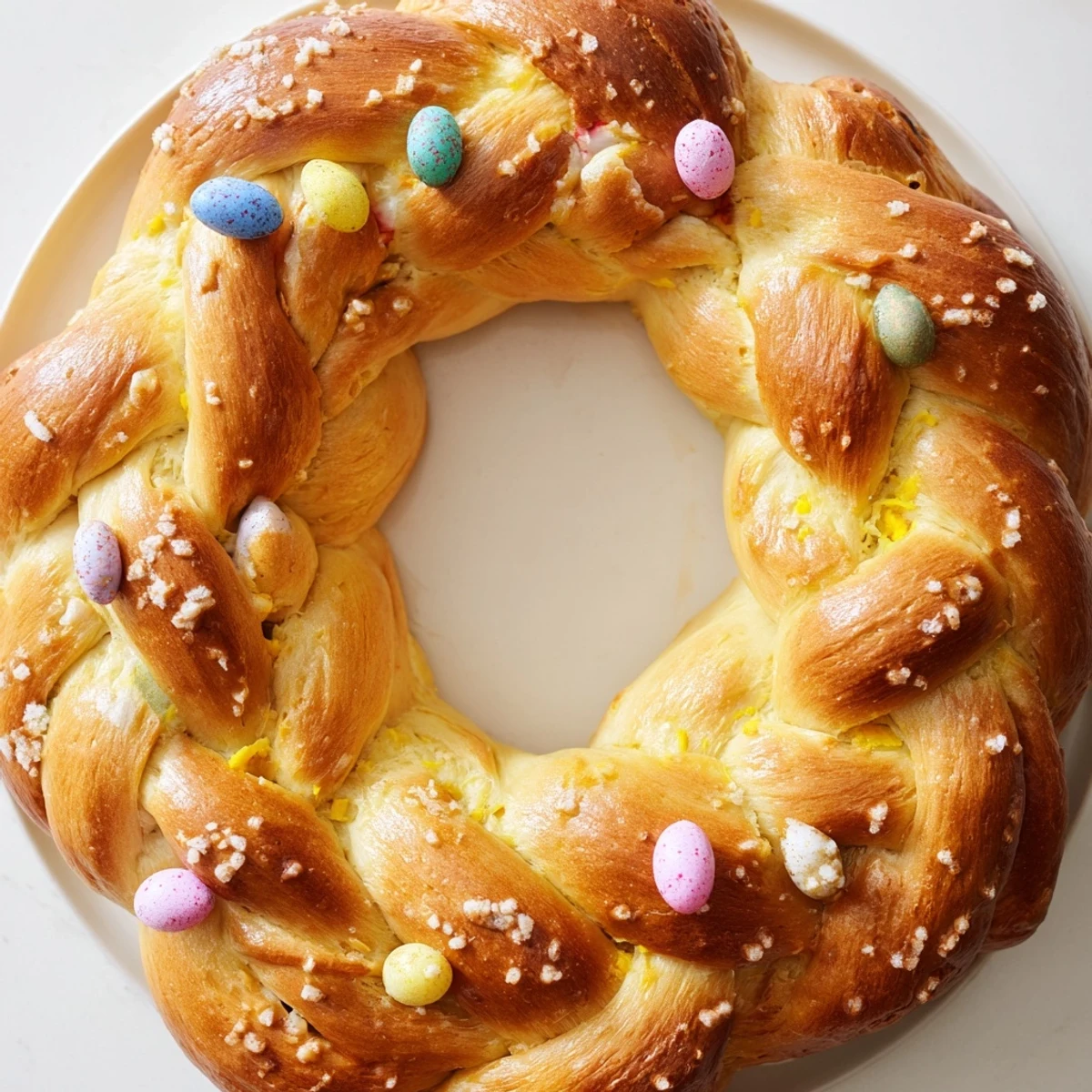
 There is something deeply satisfying about pulling a golden wreath from the oven, those colored eggs nestled safely in the braid like jewels in a crown. May your Easter morning smell like yeast and lemon, and may your kitchen be filled with people reaching for just one more slice.
Recipe FAQs
- → How do I make the colored eggs safe to bake inside the bread?
-
Use raw, dyed eggs and bake them within the dough at 350°F (180°C) for about 25-30 minutes, which cooks the eggs fully and safely.
- → Can I add spices for extra flavor in the dough?
-
Yes, adding 1/2 tsp ground cardamom enhances the dough with a warm, spiced note complementing the sweet bread.
- → What is the best way to achieve a shiny crust?
-
Brushing the dough with milk before baking creates a soft finish, while using a beaten egg wash adds a glossy shine.
- → How long should the dough rise before braiding?
-
Allow the dough to rise in a warm place until doubled in size, approximately 1 to 1.5 hours, for optimal texture.
- → How can I store leftover bread to keep it fresh?
-
Place leftovers in an airtight container and store at room temperature for up to 2 days to maintain softness.
- → Is it necessary to use a stand mixer for kneading?
-
No, kneading by hand for 8-10 minutes until elastic works well if a stand mixer isn’t available.