
 Pin It
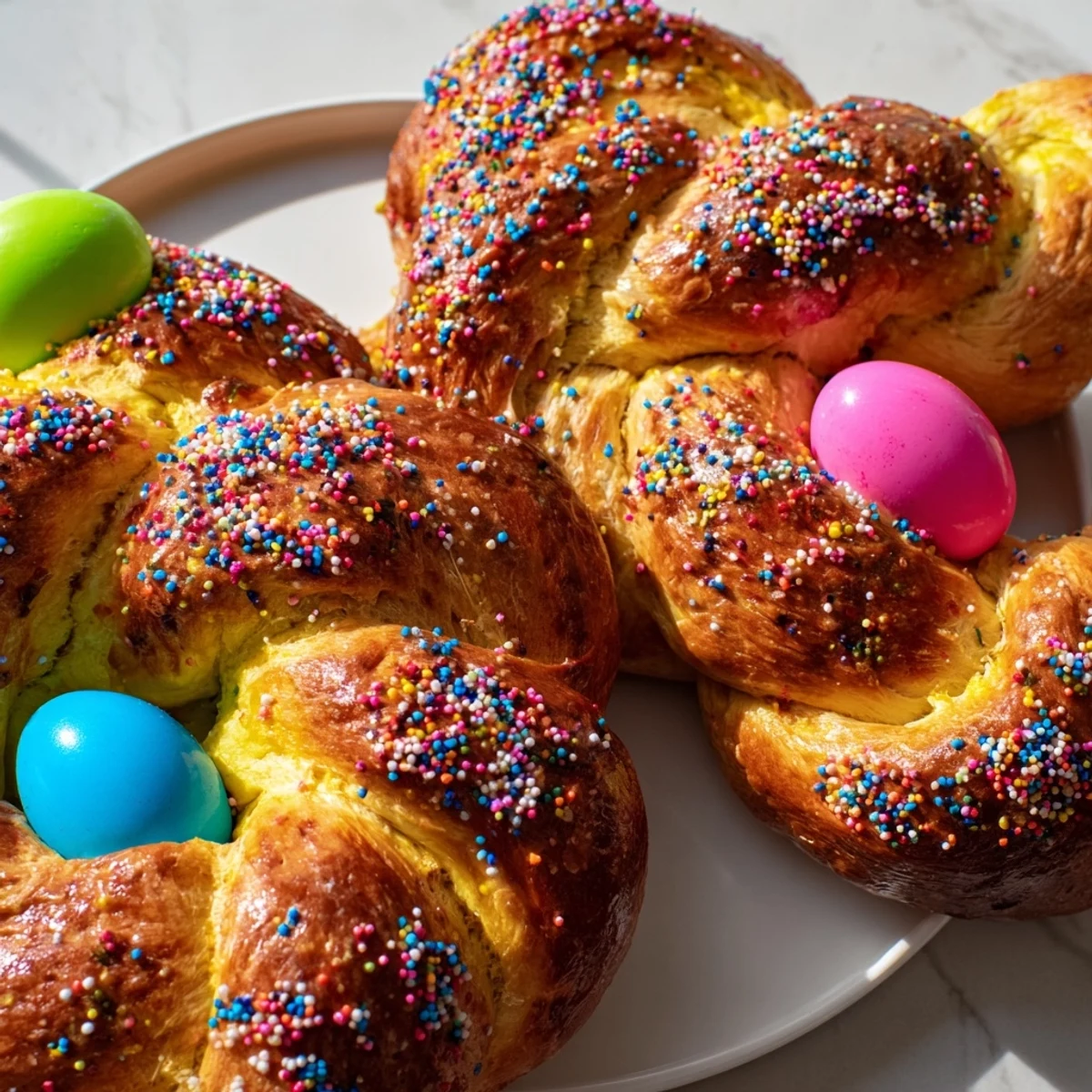
 This festive bread showcases a soft, brioche-style dough braided intricately around vibrant dyed eggs. The dough combines warm milk, sugar, and yeast for a gentle rise, followed by careful kneading and braiding to create its signature texture. After a final rise, the loaf is brushed with egg wash and decorated with colored sprinkles before baking to a golden finish. The result is a tender, slightly sweet bread perfect for holiday tables and sharing during spring celebrations.
Careful handling of dyed eggs ensures food safety, while optional additions like lemon zest or cardamom add subtle aromatic notes. This bread pairs wonderfully with butter or sweet preserves for a delightful treat.
The purple dye on my fingertips refused to wash off for three days after I helped my neighbor dye eggs for her bakery order. She laughed and told me it was my badge of honor, proof that I had finally learned to braid bread without the ropes snapping apart. That spring morning smelled of yeast and vinegar and something hopeful breaking through winter.
My niece once asked why the eggs were wearing little bread sweaters. We were running late for her school Easter party, flour dusting the kitchen like snow, and I had forgotten to set a timer. The loaves came out darker than intended, almost bronze, and she declared them dragon eggs. They disappeared faster than any perfect batch ever had.
Ingredients
- All purpose flour: The backbone of this enriched dough, providing structure without heaviness. Spoon and level rather than scooping to avoid dense bread.
- Granulated sugar: Feeds the yeast and creates that subtle sweetness that makes this bread feel celebratory rather than dessert heavy.
- Active dry yeast: The living ingredient that transforms flour into something alive and rising. Proof it properly or the braid will stay stubbornly flat.
- Salt: Balances the sweetness and strengthens the gluten network for that satisfying chew.
- Warm milk: The liquid gold that creates tender crumb. Too hot kills yeast, too cold slows it down, so aim for comfortable bathwater temperature.
- Unsalted butter: Adds richness and creates the soft, pillowy texture that makes this bread irresistible warm from the oven.
- Eggs: Room temperature is non negotiable for even incorporation into the dough.
- Vanilla extract: That warm, floral note that makes the kitchen smell like somewhere you want to stay.
- Lemon zest: Optional but brilliant, cutting through the richness with bright, sunny fragrance.
- Raw eggs for dyeing: Food safe dye only, and let them dry completely or colors will bleed into your dough.
- Beaten egg for wash: Creates that professional bakery shine and golden crust.
- Colored sprinkles: Pure joy in sprinkle form, optional but deeply recommended for the full effect.
Instructions
- Wake up the yeast:
- Stir the warm milk, a spoonful of sugar, and yeast together in a small bowl. Wait until the surface looks like a frothy cappuccino, about five to ten minutes of patient watching.
- Build the foundation:
- Whisk the flour, remaining sugar, and salt in your largest bowl. This dry mixture is where the magic will happen.
- Bring it together:
- Pour in the foamy yeast mixture, melted butter, eggs, and vanilla. Stir with a wooden spoon until a shaggy, sticky dough forms and clings together.
- Knead with intention:
- Turn onto a floured surface and push and fold for eight to ten minutes. The dough transforms from rough and torn to smooth and elastic, springing back when poked.
- First rise:
- Place in an oiled bowl, turn to coat, and cover with a clean towel. Find a warm, draft free spot and let it double in size, about an hour of patience.
- Divide and roll:
- Punch down the risen dough to release air, then cut into six equal pieces. Roll each into a rope about sixteen inches long, applying even pressure.
- Braid and shape:
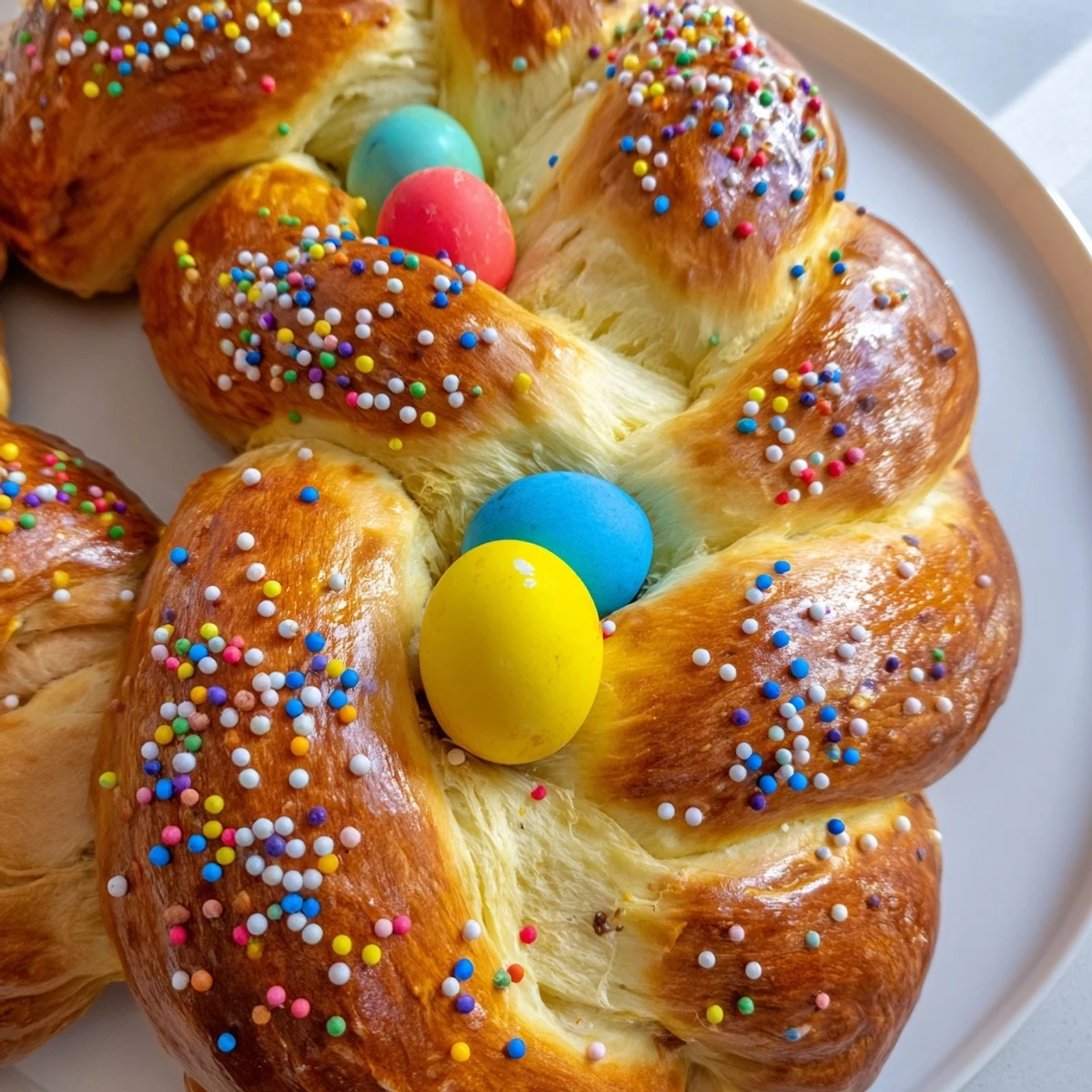
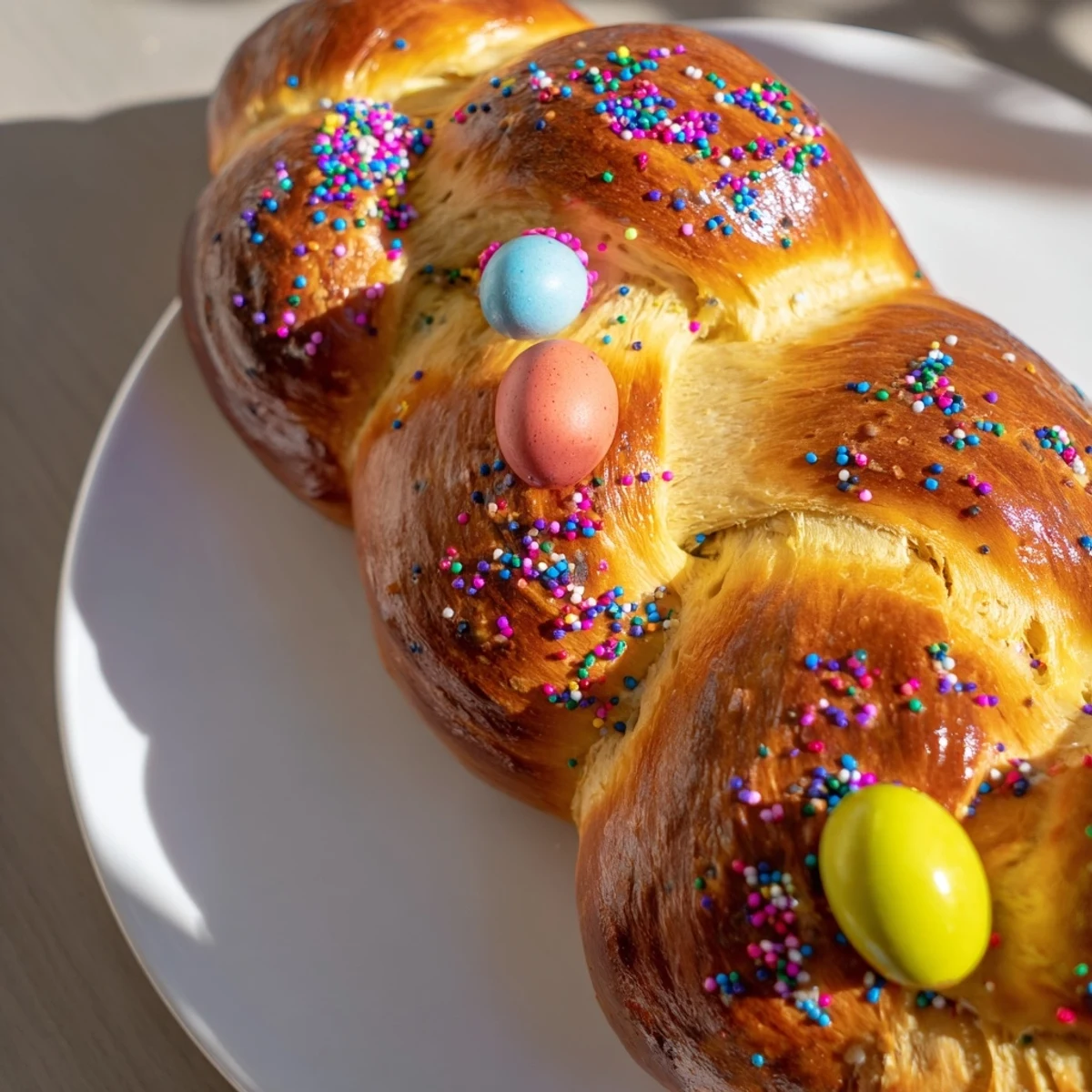
- Take three ropes and braid them like hair, pinching ends firmly to seal. Form into a ring or leave as a straight braid, placing on parchment lined sheets.
- Nestle the eggs:
- Gently press three dyed eggs into each braid, spacing them evenly. The dough will rise around them, cradling them in place.
- Final rise and prep:
- Cover loosely and let rise thirty minutes while you preheat the oven to 350°F. Brush with beaten egg and scatter sprinkles if using.
- Bake to golden:
- Bake for twenty five to twenty eight minutes until deeply golden and hollow sounding when tapped. Cool before slicing or the eggs will be too hot to handle.
 Pin It
 Last Easter my mother in law quietly took a second slice, then a third, breaking her usual one piece rule. She asked for the recipe written in her native Italian, a translation I fumbled through with a dictionary and wine. That folded paper now lives in her kitchen drawer in Rome, stained with butter and annotated in her handwriting.
The Case for Cardamom
A half teaspoon of ground cardamom transforms this bread from familiar to unforgettable, adding a subtle citrusy warmth that lingers. I discovered this accidentally when my vanilla bottle was empty and desperation led to spice cabinet exploration. Now I cannot make it any other way, though I keep that secret flexible for traditionalists.
Serving Suggestions That Matter
Room temperature butter and a jar of bitter orange marmalade create the perfect contrast to the bread's gentle sweetness. For morning after Easter breakfast, toast thick slices until the edges crisp and the center stays soft. The colored eggs make natural place markers if you are feeding a crowd, each person claiming their hue.
Troubleshooting Your Braid
If your ropes keep shrinking back while rolling, let them rest five minutes, gluten needs a break to relax into shape. Dense bread usually means the yeast was killed by hot milk or the dough was rushed through rising. For a braid that stays neat, pinch firmly at every crossover point.
- Rotate your baking sheet halfway through for even browning.
- Save a tablespoon of beaten egg wash in the fridge for touching up thin spots mid bake.
- The bread keeps beautifully for two days wrapped in cloth, not plastic.
 Pin It
 However you braid it and whoever gathers around your table, this bread carries the quiet triumph of something made by hand in a season of renewal. The dyed eggs will eventually be peeled and eaten, but the memory of pulling this from your oven will stay vivid as spring itself.
Recipe FAQs
- → How do I achieve a soft and tender bread texture?
-
Kneading the dough well helps develop gluten, while a warm environment ensures proper rising. Using melted butter and eggs enriches the dough, making it soft and tender.
- → What is the best way to dye the eggs safely?
-
Use food-safe dyes and allow the eggs to dry completely before placing them in the dough. This prevents color transfer and ensures safety during baking.
- → Can I add flavor variations to the dough?
-
Yes, adding lemon zest or a pinch of ground cardamom can bring aromatic depth without overpowering the bread's subtle sweetness.
- → How long should I let the dough rise?
-
Allow about one hour for the initial rise until doubled in size, then a 30-minute rise after shaping and braiding for optimal texture.
- → What can I serve alongside this bread?
-
Butter, sweet preserves, or a light glaze complement the bread’s flavor and enhance the festive experience.
- → Is it necessary to use an egg wash before baking?
-
Applying a beaten egg wash adds a shiny golden crust and helps sprinkles adhere, enhancing both appearance and texture.