
 Pin It
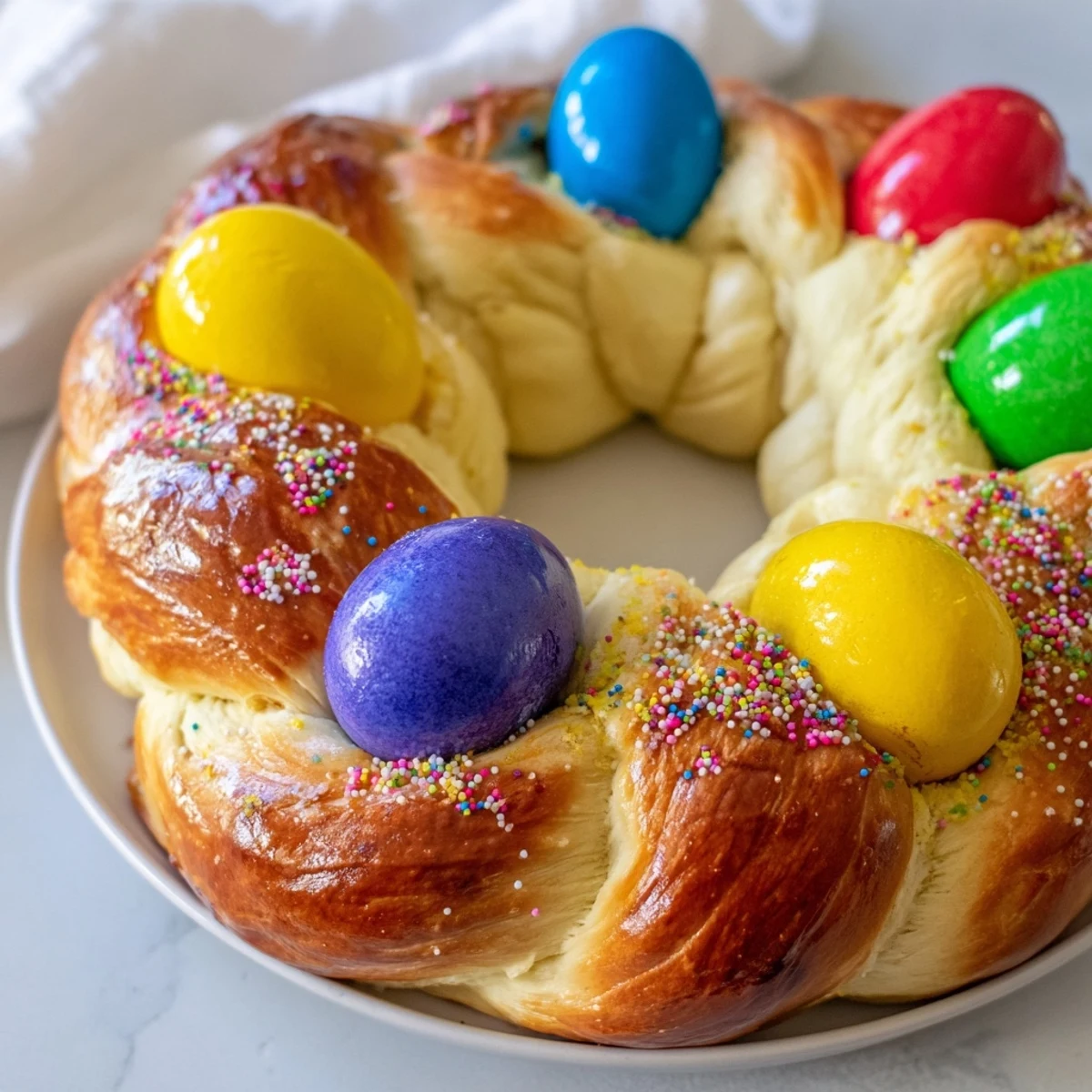
 This festive braided bread combines a soft, slightly sweet dough with the cheerful addition of brightly colored eggs nestled into the braid. Made with vanilla and citrus zest, it offers a delicate aroma and tender crumb. The dough is kneaded until smooth, allowed to rise twice, braided carefully, and baked to a golden finish. Ideal for holiday tables, this bread is both decorative and flavorful, with optional sprinkles adding a playful touch.
The kitchen still smelled like vinegar and food coloring from the Easter egg disaster earlier that morning. My oldest daughter had dyed everything, including her favorite shirt and somehow the cat. I needed something to salvage the holiday mood, preferably something that would use up those beautifully chaotic eggs. This braided bread has been my family Easter tradition ever since that colorful, slightly chaotic spring day.
Last year my sister tried to make this and forgot to let the dough rise properly. The bread came out dense and chewy, but we ate every bite anyway because the flavor was still incredible. She called me at 6 am the next Easter to make sure she had the timing right. Thats when I knew this recipe had become part of our family story.
Ingredients
- All purpose flour: The backbone of this tender crumb, measuring correctly matters more than you think
- Granulated sugar: Just enough sweetness to balance the citrus without making it dessert like
- Active dry yeast: Make sure your water is warm not hot, or youll kill the yeast before it starts working
- Whole milk: Creates a softer dough than water, and room temperature ingredients blend better
- Unsalted butter: Melted and slightly cooled helps distribute richness evenly through every bite
- Large eggs: Room temperature eggs incorporate more smoothly into the dough structure
- Salt: Enhances all the other flavors, especially the vanilla and citrus notes
- Vanilla extract: The secret ingredient that makes the kitchen smell like a European bakery
- Citrus zest: Lemon or orange zest cuts through the richness and adds brightness to every bite
- Raw dyed eggs: These cook right inside the bread, becoming part of the presentation
- Egg wash: Creates that gorgeous golden brown finish that makes everyone grab their cameras
Instructions
- Wake up the yeast:
- Combine lukewarm milk with one tablespoon sugar and the yeast, then wait until it turns foamy and alive
- Build the foundation:
- Whisk flour, remaining sugar, and salt together before adding the yeast mixture, melted butter, eggs, vanilla, and citrus zest
- Work the dough:
- Mix until a soft dough forms, then knead on a floured surface for eight to ten minutes until it feels smooth and elastic under your hands
- First rise:
- Place dough in a greased bowl, cover it, and let it rise in a warm spot for one to one and a half hours until doubled
- Shape it:
- Punch down the dough, divide into three equal pieces, and roll each into a sixteen inch rope
- Create the braid:
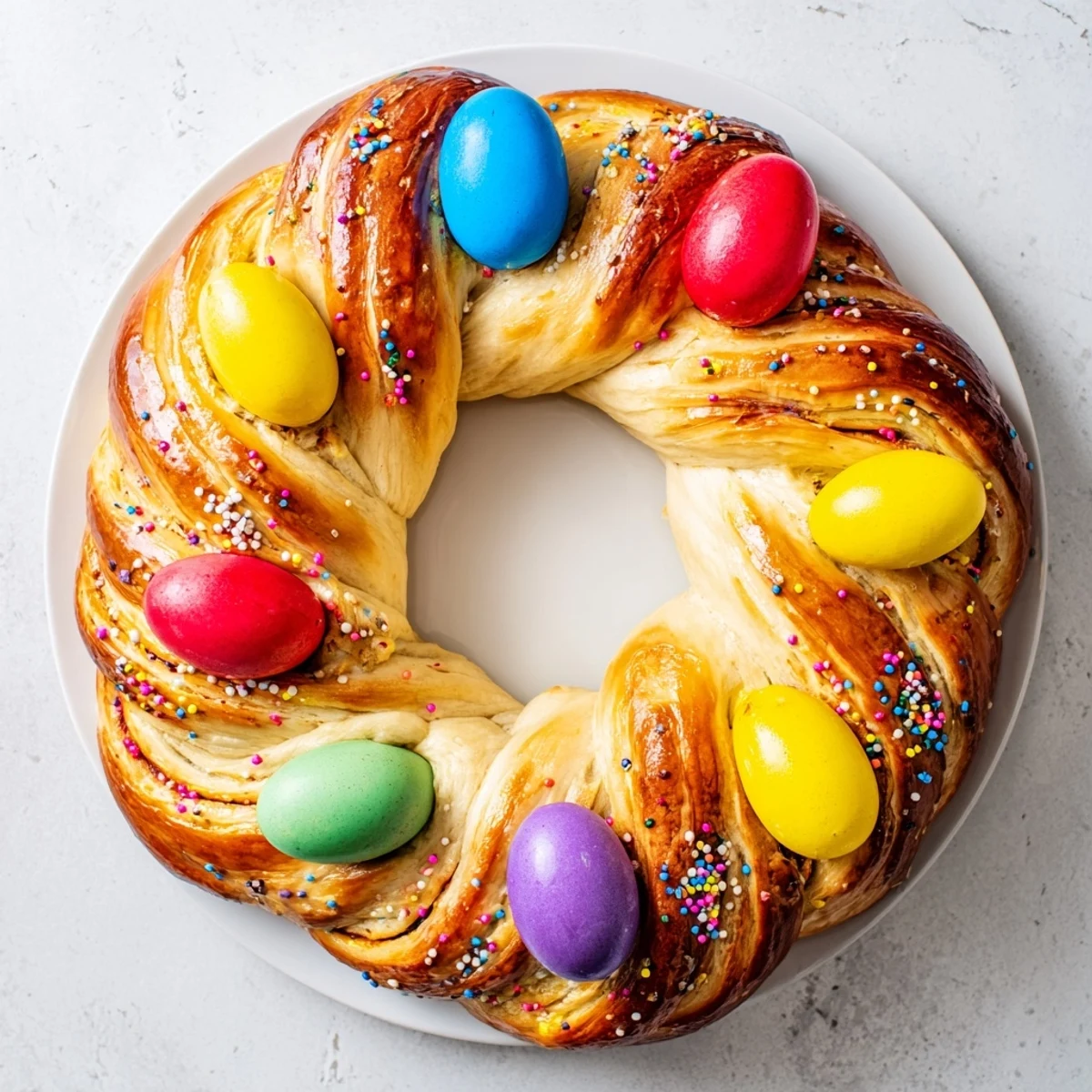
- Braid the ropes together and form into a ring or leave straight, pinching the ends tightly to seal
- Add the eggs:
- Transfer to a parchment lined baking sheet and nestle the dyed eggs gently into the braid, spacing them evenly
- Second rise:
- Cover and let rise another thirty to forty five minutes while you preheat the oven to 350°F
- Give it shine:
- Brush the bread with the egg yolk and milk mixture, being careful to avoid the colored eggs, then add sprinkles if you like
- Bake to perfection:
- Bake for twenty eight to thirty two minutes until golden brown, tenting with foil if it browns too quickly
 Pin It
 My grandmother always said the braiding was the most important part. She taught me to pull gently but firmly, creating even ropes that would bake into a beautiful crown. Now I teach my children the same technique, our hands working together to continue something that started in kitchens I never saw but can still imagine.
Making It Your Own
I have tried adding ground cardamom during particularly cold winters when something spicy felt right. The warmth of the cardamom against the citrus zest creates such a beautiful complexity. One year I swapped vanilla for almond extract and my brother said it was the best version yet.
Timing The Rising
Drafty kitchens can make rising tricky, so I learned to turn my oven on for exactly one minute then turn it off completely. The residual warmth creates the perfect proofing environment. Just remember to remove the dough before preheating for baking, or you will have a very flat surprise.
Serving And Storage
This bread is absolutely best the day it is made, when the crust is still crisp and the inside is pillowy soft. Leftovers can be stored in an airtight container for up to two days, though toasted leftovers with butter are pretty spectacular. The colored eggs should be removed if you plan to store the bread.
- Slice thick and serve with salted butter for contrast
- Extra sprinkles make everything more festive
- Leftovers make amazing French toast the next morning
 Pin It
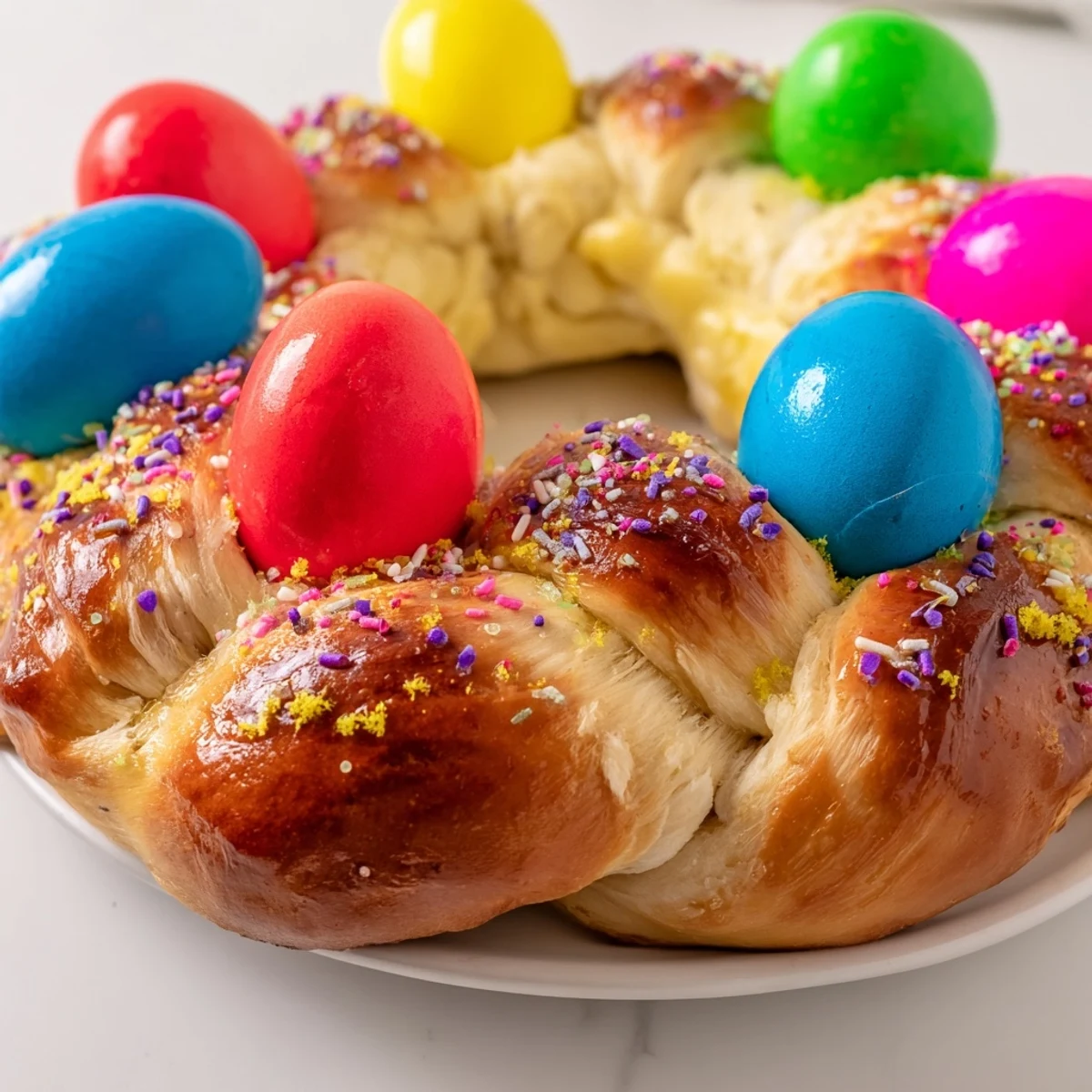
 There is something magical about pulling this bread from the oven, the eggs bright against golden dough, the whole house smelling like vanilla and warm bread. Happy baking, and may your Easter be filled with more joy than chaos.
Recipe FAQs
- → How do I achieve a soft and tender bread texture?
-
Ensure thorough kneading until the dough is smooth and elastic, and allow proper rising times for airy, pillowy results.
- → Can I use pre-boiled eggs for decorating?
-
Yes, pre-boiled and cooled colored eggs can be nestled into the braid if you prefer fully cooked eggs.
- → What flavor variations can enhance the bread?
-
Adding a pinch of ground cardamom or substituting vanilla extract with almond extract brings subtle, warm flavor notes.
- → How should the colored eggs be prepared for baking?
-
Raw, dyed eggs are placed directly into the braid and cook during baking, but handle gently to keep colors vibrant.
- → How can I prevent the bread from browning too fast in the oven?
-
If browning too quickly, loosely tent the bread with foil partway through baking to maintain a golden crust.