
 Pin It
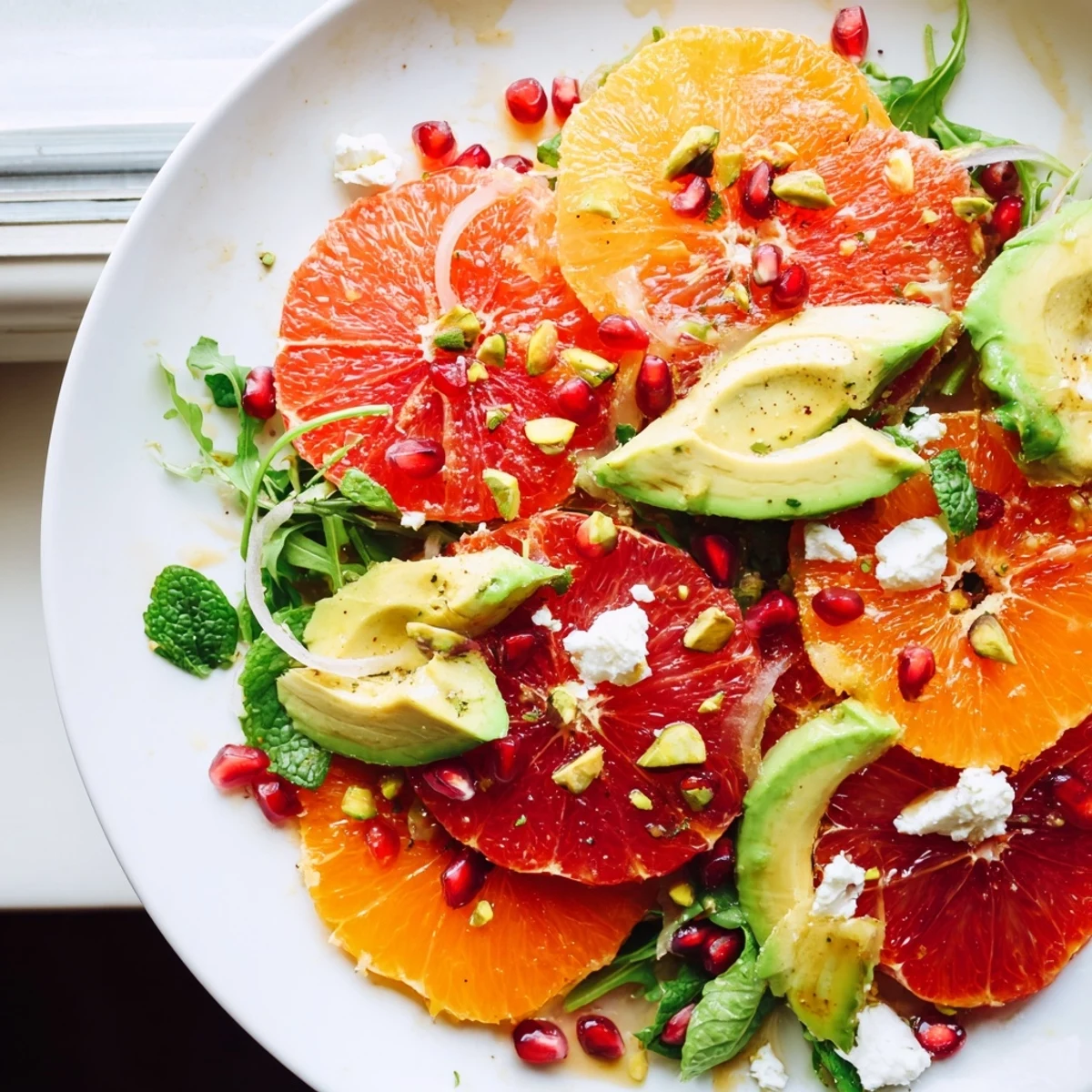
 This refreshing Mediterranean citrus salad brings together juicy orange and grapefruit segments with jewel-like pomegranate seeds for a stunning visual presentation.
Creamy avocado slices and tangy crumbled feta add rich, satisfying contrast to the bright citrus flavors, all served over a bed of fresh mixed greens.
A simple honey-lemon Dijon dressing ties everything together beautifully. Ready in just 20 minutes with no cooking required, it makes an elegant starter or light meal.
The Saturday morning farmers market had a citrus vendor who stacked blood oranges like jewels, and one week I walked home with a bag heavy enough to rethink my entire lunch plan. That afternoon, my kitchen smelled like sunshine and rebellion against winter. This salad was born from pure impulse, and now it shows up on my table every single season the markets get bright fruit.
My neighbor Sandra once leaned over the fence while I was sectioning grapefruits on the patio and demanded to know what smelled so good. I handed her a plate over the rosemary hedge, and she stood there eating it in silence before walking back inside without saying goodbye. She now texts me every Friday asking if citrus season has started yet.
Ingredients
- Citrus fruits (2 large oranges, 2 large grapefruits, 1 blood orange if you can find one): The blood orange is not just for looks, its raspberry undertone shifts the whole flavor profile into something unexpected.
- 1 ripe avocado: Choose one that yields gently when pressed but has no dark soft spots, because mushy avocado will collapse under the weight of the dressing.
- 1 small red onion: Slice it paper thin so it whispers through the salad instead of shouting.
- Half a cup pomegranate seeds: These are the jewels in the title, and they pop between your teeth like tiny celebrations.
- Half a cup feta cheese, crumbled: A good block of sheep milk feta will crumble into irregular chunks that salt the salad in surprising little bursts.
- 4 cups mixed greens: Arugula brings pepper, baby spinach brings calm, and together they give the bold citrus a soft place to land.
- 3 tbsp extra virgin olive oil: Use the grassy, peppery one you save for finishing, because this dressing is raw and the oil flavor carries everything.
- 1 tbsp fresh lemon juice: This bridges the gap between the sweet oranges and the sharp mustard.
- 1 tsp honey or maple syrup: Just enough sweetness to round the acidity without making anything cloying.
- Half tsp Dijon mustard: It emulsifies the dressing so it clings to each leaf instead of pooling at the bottom.
- Sea salt and freshly ground black pepper: Season gradually and taste as you go, because the feta already contributes salt.
- 2 tbsp fresh mint leaves, torn (optional): Mint makes the whole plate taste cooler and more alive, especially on warm days.
- 1 tbsp toasted pistachios or walnuts, chopped (optional): Toasted nuts add a crunch that contrasts the creaminess of avocado beautifully.
Instructions
- Peel and slice the citrus:
- Cut the tops and bottoms off each fruit so they sit flat, then slice away the pith in long curving strokes following the shape of the fruit. Cut them into thin rounds or segments, catching every drop of juice that escapes because that liquid gold belongs in your dressing.
- Prepare the avocado:
- Halve it, twist gently to separate, and tap your knife into the pit with confidence to remove it in one clean motion. Slice the flesh into thin elegant strips and squeeze a tiny bit of lemon over them to keep the color bright while you finish the rest.
- Slice the red onion:
- Cut it as thin as your knife and patience allow, then separate the rings with your fingers so they scatter delicately across the salad rather than clumping in one spot.
- Whisk the dressing:
- In a small bowl, combine the olive oil, lemon juice, honey, Dijon mustard, a pinch of salt, and a few grinds of pepper, then whisk until it turns cloudy and thick enough to coat the back of a spoon.
- Build the platter:
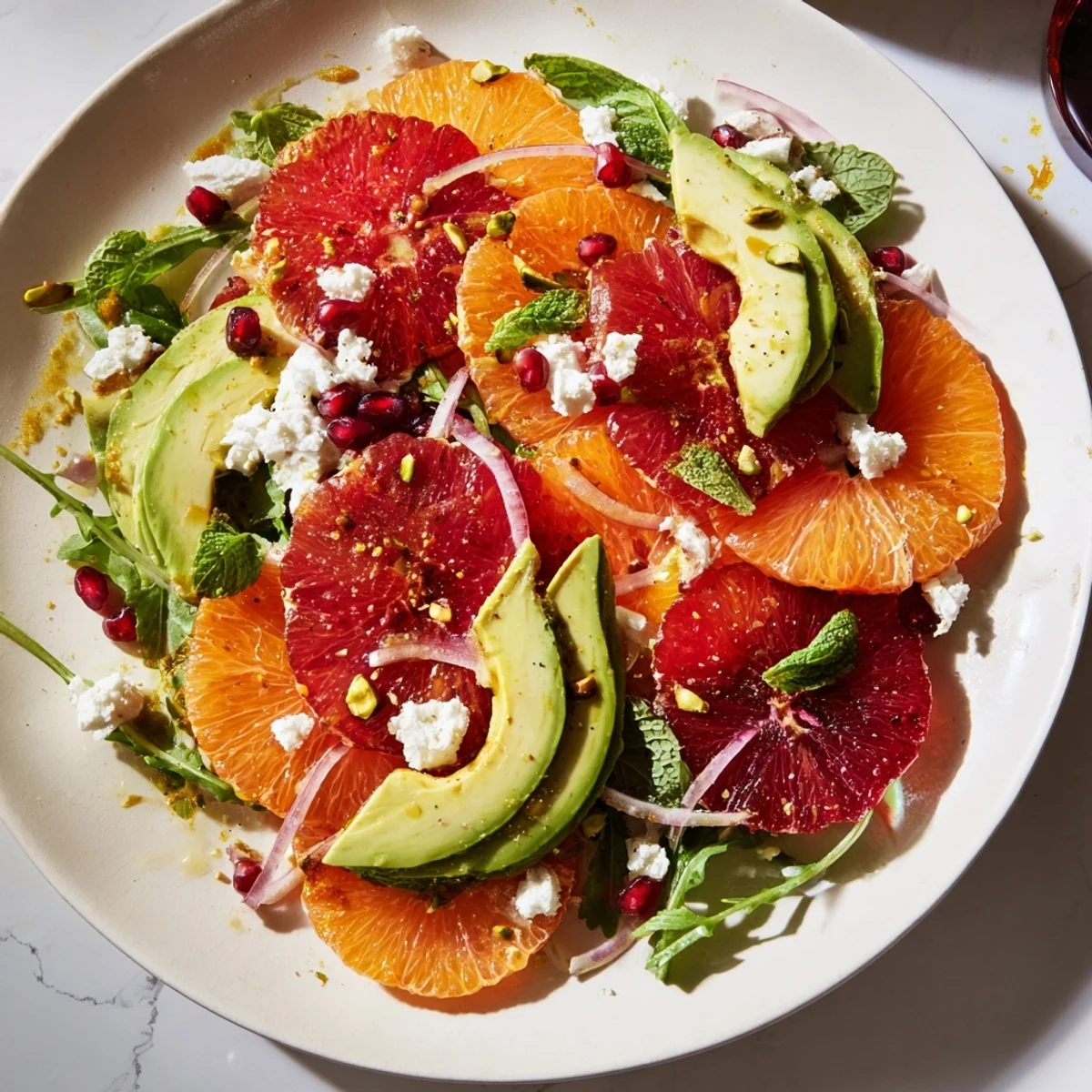
- Spread the greens across a large serving platter like a wide soft bed, then arrange the citrus rounds and avocado slices in an overlapping pattern that looks intentional but relaxed. Scatter the red onion rings across the top without overthinking it.
- Add the jewels and cheese:
- Sprinkle pomegranate seeds across the surface generously, then crumble the feta with your fingers so it falls in uneven, rustic pieces that catch in the greens and citrus.
- Dress and finish:
- Drizzle the dressing in a wide back and forth motion over the entire platter, then scatter torn mint and toasted nuts if you are using them, and serve immediately before the avocado starts to settle.
 Pin It
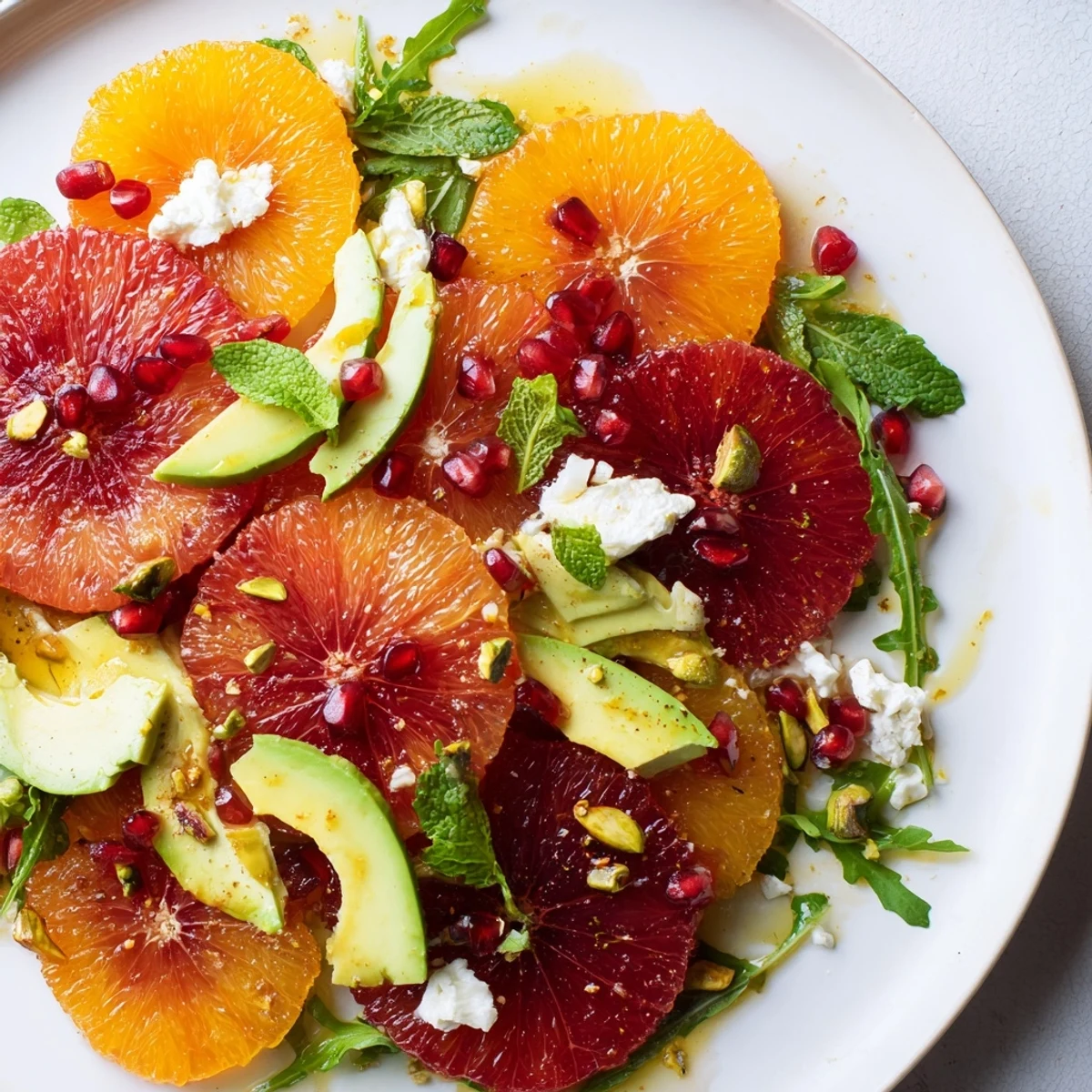
 The first time I served this at a dinner party, the conversation actually stopped for a full thirty seconds while everyone took their first bite, and my friend David looked up and said he would trade his main course for another plate of salad.
Dressing Doubles Beautifully
Make twice the amount of dressing and keep the extra in a jar in the refrigerator for up to five days. It works wonders drizzled over roasted carrots, spooned onto grilled fish, or simply tossed with leftover greens for a quick next day lunch that feels intentional.
Making It Your Own
This salad forgives substitutions gracefully, so swap grapefruit for pomelo if you find one, or use blood oranges exclusively when they are in season for a plate that looks like a painting. Crumbled goat cheese works in place of feta, and toasted almonds are just as happy here as pistachios.
Serving And Storing
This salad is at its absolute best the moment it is assembled, because the avocado and citrus begin releasing their juices and the greens start to wilt under the weight. If you must prep ahead, keep every component separate and build the platter right before serving.
- Store leftover components in airtight containers in the refrigerator for up to two days, but know that the avocado will darken.
- A squeeze of extra lemon juice on stored avocado slices slows the browning considerably.
- Never dress the greens in advance unless you enjoy eating a sad, soggy mess.
 Pin It
 Some recipes become staples because they are easy, and others earn their place because they make people happy around a table. This one does both, and it asks almost nothing of you in return.
Recipe FAQs
- → Can I prepare the citrus segments ahead of time?
-
Yes, you can peel and segment the citrus fruits up to 24 hours in advance. Store them in an airtight container in the refrigerator to keep them fresh and juicy.
- → What is the best way to remove pomegranate seeds?
-
Cut the pomegranate in half and gently tap the outside with a wooden spoon over a bowl. The seeds will fall out easily. Alternatively, remove them by hand under water to prevent staining.
- → How do I keep the avocado from browning?
-
Slice the avocado just before serving and toss it lightly with lemon juice. The citric acid helps slow oxidation and keeps the slices looking fresh and green.
- → What citrus fruits work best in this salad?
-
Oranges and grapefruits are classic choices, but blood oranges add beautiful color. You can also include tangerines, pomelo, or cara cara oranges for varied flavor and visual appeal.
- → Can I make this salad dairy-free?
-
Absolutely. Simply omit the feta cheese or replace it with a plant-based feta alternative. The salad remains flavorful and satisfying with the creamy avocado and vibrant citrus.
- → What pairs well with this citrus salad as a main course?
-
Grilled chicken, shrimp, or seared scallops complement the bright flavors beautifully. For a vegetarian option, add chickpeas or quinoa for extra protein and substance.