
 Pin It
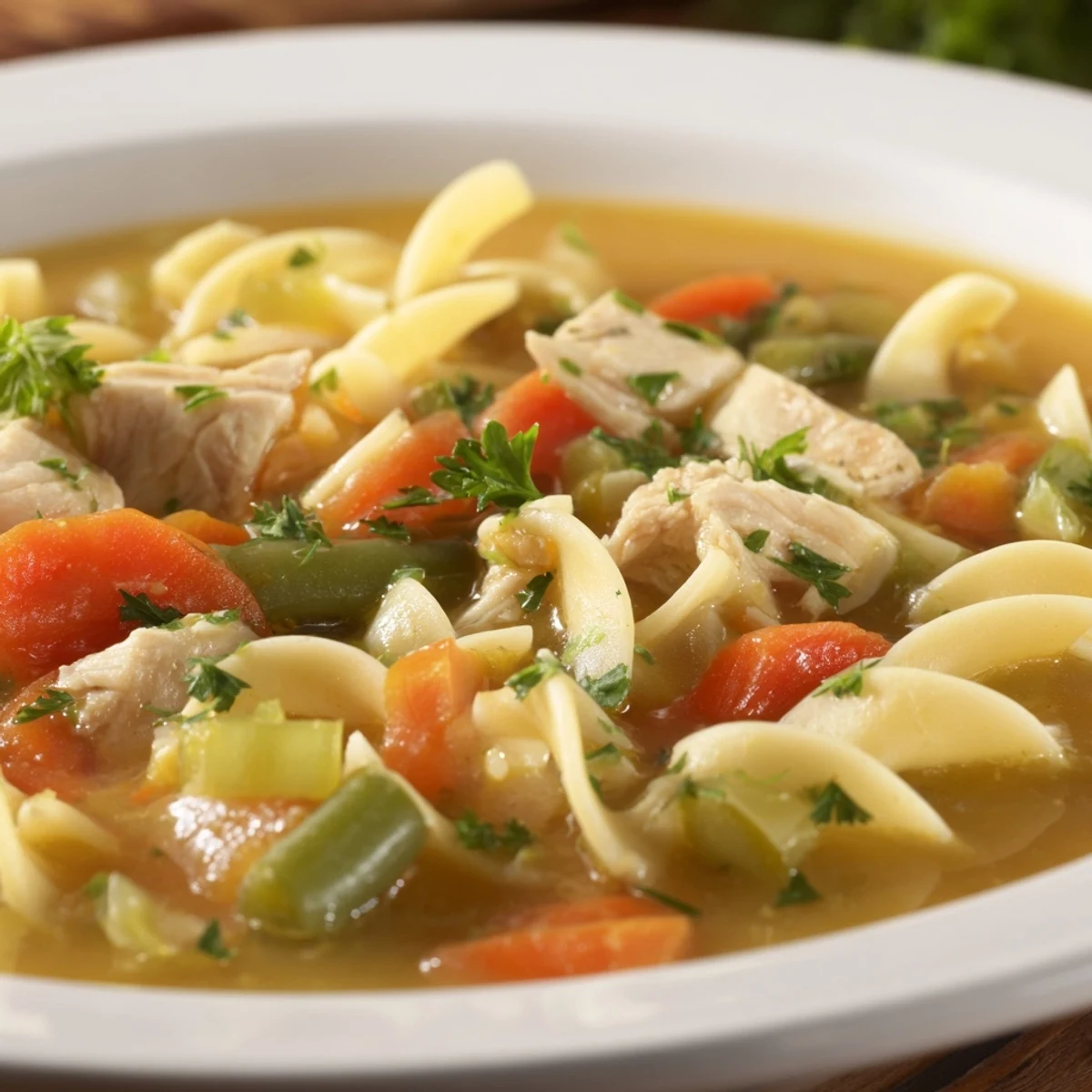
 This hearty meal combines tender chicken pieces with a medley of fresh vegetables, including carrots, celery, green beans, and peas. Simmered gently in a flavorful broth infused with herbs like thyme and parsley, soft egg noodles complete this wholesome dish. Quick to prepare and packed with nourishing ingredients, it offers a cozy, satisfying option for any day of the week. A splash of lemon juice brightens the flavors, and fresh parsley adds a vibrant finish.
There's something about the smell of chicken and vegetables simmering together that pulls me right back to my grandmother's kitchen on a gray afternoon. She'd shuffle around in her apron, tossing in handfuls of noodles without even measuring, and somehow it always turned out perfect. Years later, I finally understood her magic wasn't in precision—it was in trusting that simple ingredients, given time and warmth, could become something deeply comforting.
I made this the night my friend called in a panic about her cold, and I promised her a bowl of soup within an hour. She was skeptical until that first spoonful, when she exhaled and said it tasted exactly like what she needed. That's when I realized this soup isn't just filling—it's the kind of thing people remember when they're feeling low.
Ingredients
- Chicken breasts: Boneless and skinless means they cook fast and stay tender; cutting them into bite-sized pieces helps them cook evenly throughout the broth.
- Carrots and celery: These form the aromatic base that makes the broth smell incredible as it simmers.
- Onion and garlic: The onion softens into sweetness while garlic adds a subtle depth that shouldn't be skipped.
- Green beans and peas: The beans give texture, and the peas add a touch of natural sweetness that balances the savory broth.
- Chicken broth: Low-sodium lets you control the seasoning and keeps the soup from becoming too salty as it reduces.
- Egg noodles: Wide noodles hold onto the broth better than thin ones; they're worth seeking out if your store has them.
- Olive oil: Two tablespoons is enough to prevent sticking without making the soup feel heavy.
- Bay leaf, thyme, and parsley: Together they create a gentle herb profile that ties everything together without overpowering.
- Salt and pepper: Taste as you go; broth can be deceiving about salt levels until everything is cooked.
- Lemon juice: Optional but transforms the soup from good to bright; add it at the very end if you go this route.
Instructions
- Build your flavor base:
- Heat the olive oil in your pot and add the onion, carrots, and celery. Let them soften for a full five minutes, stirring occasionally—you're not rushing, you're coaxing out their natural sweetness. The kitchen will smell wonderful.
- Wake up the garlic:
- Add the minced garlic and cook for just a minute until it turns fragrant and golden. This step is brief but crucial; too long and it turns bitter.
- Brown the chicken lightly:
- Stir in the chicken pieces and let them sit for a minute on each side until they're no longer pink on the outside. They don't need to be fully cooked yet—the broth will finish that job.
- Pour in the broth:
- Add your chicken broth along with the bay leaf, thyme, salt, and pepper. Bring it to a gentle boil, watching as the liquid becomes infused with color and aroma. This is where the soup really begins.
- Simmer with the green beans:
- Lower the heat and add the green beans, letting everything simmer uncovered for fifteen minutes. The broth deepens in flavor, and the vegetables begin to soften.
- Add noodles and peas:
- Stir in the egg noodles and frozen peas, then simmer for eight to ten minutes until the noodles are tender and the chicken is fully cooked through. The frozen peas will thaw in seconds, adding both color and sweetness.
- Taste and finish:
- Remove the bay leaf, taste carefully, and adjust salt and pepper if needed. If you're using lemon juice, stir it in now for a brightness that lifts the whole bowl.
- Serve with care:
- Ladle the soup into bowls and finish each one with a small handful of fresh parsley. The green flecks aren't just pretty—they add a fresh herbaceous note that ties everything together.
 Pin It
 I learned that this soup is best when it's shared—whether that's with someone under the weather, a friend dropping by unexpectedly, or just yourself on a day when the world feels too loud. There's something about ladling it into bowls and watching steam rise that feels like small magic.
Why This Soup Never Disappoints
The beauty of this recipe is its flexibility wrapped in a reliable structure. You're never fighting against the recipe; you're working with it, and that ease means you'll actually make it again. The chicken stays tender because it cooks gently in broth rather than being boiled aggressively, and the vegetables have enough time to give their flavor to the liquid without falling apart.
Variations That Keep It Interesting
After making this soup a handful of times, you'll start to see it as a canvas. Swap the green beans for diced potatoes if you want something more filling, or add corn for sweetness. I once threw in diced zucchini near the end and it added a subtle earthiness that reminded me of late summer. The core recipe holds strong enough that these changes feel natural rather than like you're fixing something broken.
Serving and Storage Wisdom
Serve this soup as soon as it's done if you want the noodles at their best—they're tender but not mushy, and the texture matters. If you're making ahead, cook the noodles separately and add them only to individual bowls; that way, leftovers stay fresh and the noodles don't turn to mush in the fridge. The soup keeps beautifully for three days, and it's one of those rare dishes that tastes even better on day two, when all the flavors have had time to get to know each other.
- Store in an airtight container and reheat gently on the stovetop rather than the microwave.
- Freeze the broth and chicken separately from the noodles if you want soup that'll last weeks.
- Always taste and re-season after reheating, as flavors can shift slightly in storage.
 Pin It
 This soup has earned its place in my regular rotation because it asks so little and gives so much in return. Make it when you need comfort, when someone else needs care, or simply because a warm bowl sounds right.